










There are a number of toy social media influencer kits on the market but Jenny Sanders has deep reservations about Christian parents allowing their children to play with them
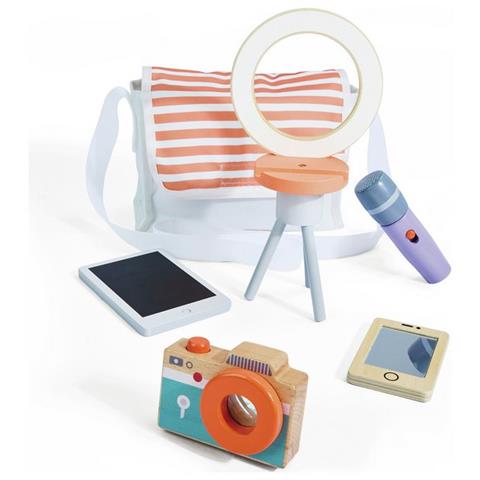
Spring always ushers in a slew of birthdays in my diary, so the question of which is the appropriate present to buy comes around again. I think this was easier when the children were younger. There was always a toy, puzzle or game that featured on their wish list; usually something to stimulate their imagination and feed in to the all-important ingredient of child development: creative play.
In my house we had a parade of doctors, nurses, soldiers, fairies, princesses, famers, cowboys, firemen and policemen, and great fun it was! Perhaps you’re still up to your elbows in all of that.
Is the influencer kit really any different from the child’s karaoke machine, the pirate’s outfit or the spectrum of other toys on the menu of entertainment apparatus?
Recently, however, eyebrows were raised by the addition of an item in the Argos catalogue of desirables: an influencer kit designed specifically for toddlers. The £15 pouch contains a wooden tripod stand with a pretend ring light, a camera, a model tablet, smart phone and a microphone. The company insists that the kit is designed to cultivate children’s storytelling skills and creativity through career role-play’. So far, so innocuous; or is it?
The concern that’s been flagged here is that by promoting a toy which unashamedly pushes children towards the world of social media, of finding self-worth through the approval of others and the pressure of curating an image over a reality, adults are inadvertently putting children at risk. What do you think? Is the influencer kit really any different from the child’s karaoke machine, the pirate’s outfit or the spectrum of other toys on the menu of entertainment apparatus?
The only real reason such a young child would be drawn to such a toy is probably because they are already a consumer of social media material which, itself, raises a fairly strong red flag
During my time at a primary school in Wiltshire, most of the children in Key Stage 2 (7+) expressed a desire to become either a footballer or a pop star – definitely someone famous. It didn’t matter how much I sought to challenge them to find a cure for cancer, become explorers, pilots or engineers, they were wrapped up in a world heavily inspired by Saturday night television talent shows. But they were children; what did I expect?
The Bible is clear that we become like what we look at (2 Corinthians 3:18), so the Argos debacle really raises the question of why a toddler would even want this toy. A two- or three-year-old will only know what a ring light is if they’ve seen someone else use one. The only real reason such a young child would be drawn to such a toy is probably because they are already a consumer of social media material which, itself, raises a fairly strong red flag.
we don’t provide our growing children with mixology kits to become cocktail bar staff or with toy cigarettes to learn how to sell tobacco
The difference between most other careers and the one that we’ve come to know as an influencer, is that there’s a marked pattern in which the influencer swiftly becomes the influenced. Shaped by the responses and expectations of their audience, influencers have found themselves in the position of ‘audience capture’. By continually tailoring their material to the demands of their audience, individuals often lose their authenticity and find themselves mirroring values and soundbites that are far removed from their original convictions.
Influencers also live under the stress of producing meaningful content, often on a daily basis, as they curate and contrive their reality to fit the format. Output is prioritised over input; there is little time for self-reflection; everything is monetised. There are so many things you now cannot say on social media platforms for fear of being cancelled that former influencers talk about burnout and how they allowed engagement to tail off so they could ‘find themselves’ again.
Read more:
Why this Christian son thinks social media bans for under 16s will fail
Why this Christian dad welcomes the social media ban for under 16s
Are smartphones rewiring my kid’s brain?
The Anxious Generation by Jonathan Haidt might have an alarmist title but there is plenty in the book that Christian parents can agree with
One former influencer, now a dad of three young children put it this way to me: Just as we don’t provide our growing children with mixology kits to become cocktail bar staff or with toy cigarettes to learn how to sell tobacco, I would not buy this product for my kids. It’s just not appropriate.
Influencing is not the same as other careers. It’s given rise to ‘the anxious generation’. This is the title of Jonathan Haidt’s 2024 bestseller which claims that switching from a ‘play-based’ childhood to a ‘phone-based’ one has been a huge contributory factor in the surge in mental health issues as young people grapple with depression and self-harm. The rise in levels of distraction in the classroom, ADHD and sleep deprivation have all been blamed on unlimited hours of social media engagement.
Too much exposure to all of this is rewiring young brains in a destructive and negative way
Just last month, Meta (Facebook and Instagram) and You Tube were found liable when a $6 million lawsuit brought by a claim that addictive features were built into their platforms was found to be true. Although the companies plan to appeal the court decision, it’s sobering to discover that some of our hunches we’ve had about the nature of social media are substantial and grounded in fact. Too much exposure to all of this is rewiring young brains in a destructive and negative way.
By feeding the part of influencing that consistently puts self at the centre we may be either over-reacting or leading children down a dangerous path. The freedom to play and enjoy the pleasure of unleashed imaginations could well become warped as the focus shifts to what an individual produces. Dreaming and possibility can give way to delivering something that’s stunted and required. Little people-pleasers may grow into adolescent peer-pleasers which will make them vulnerable in situations where they may most need protecting.
our children, especially when they are very young, emulate us. They want to be us
There’s no doubt that there are people using social media platforms for good – Bear Grylls is an obvious example – but let’s not rush into exposing small children to this world when there are so many more positive resources available to us.
The fact is that our children, especially when they are very young, emulate us. They want to be us. We are still not only their primary care givers but their heroes, heroines and examples. If we choose to spend time in their presence glued to our phones, a blue screen glow reflected in our faces, scrolling and emotionally unavailable, we will pay a price for it; they will want to do the same. If we choose to put those aside, look our children or grandchildren in the eye and engage with them in play where they’re at, we will reap more satisfactory rewards as well as be investing in their healthy mental and emotional development.
Parents, relatives, friends and church families can all get on board with this.
Who were the influences in your early years? Which individuals impacted your journey of faith?
You are more likely to remember the important people who featured in your spiritual growth than any number of sermons you listened to, TV programmes you watched or books you read. It’s that personal connection that so often builds the bridge Jesus walks across to meet us.
I am grateful for church ‘aunties’ and ‘uncles’, Bible Club teachers and Sunday school helpers who took the time to talk to me, listen to me, hear who I was beyond the words and activities, who prayed for me and stayed interested in me as I grew through my formative years. That relational influencing was authentic and impactful. As adults, we have the privilege of being those people for a new generation. Let’s embrace it.