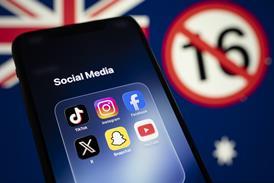









Keir Starmer has just announced a ban on social media for under-16s - this follows Australia’s lead. Two Australian’s share their thoughts. Graham Stanton is a leading youth ministry researcher and trainer and is hopeful the new laws will be effective - however, in this article, Jono Stanton, a 21-year-old musician, and Graham’s son, explains why he is not convinced
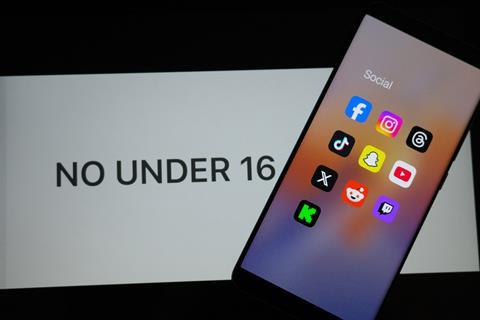
For Graham’s alternative view see here.
The Social Media Minimum Age framework (SMMA) in Australia is a recognition of the dangers that young people face online, and demonstrates a commitment to care for not just this generation, but for generations to come. That our government is leading the world in pushing back against the influence of social media companies makes me proud to be Australian.
The SMMA sets up a power struggle between the government and young people, and I’m not liking the government’s chances
However, as proud as I am, there is a lot more to be done. Our Prime Minister has said that one of the markers of success for this act was the discussion that would ensue. In the hope of moving towards a better future, I’m glad we’ve at least taken this first step. I write this critique in the hope that the next step in that discussion would be better placed.
The SMMA sets up a power struggle between the government and young people, and I’m not liking the government’s chances. According to ABC’s study of over 17 thousand Australian young people, 3 out of 4 account holders planned on continuing to use social media after the ban began.The Minister for Communications, Anika Wells, has insisted that the “migratory patterns” of children booted from platforms will be carefully monitored. This just sets the stage for a contest: How long can young people covertly use an alternative site before it is found and banned?
As I see it, this game of “whack-a-mole” will have two consequences antithetical to the purpose of this new law.
First, it ensures that over time viable alternative platforms for young people will become more covert and more obscured. If one of the selection pressures for social networking platforms is visibility to the government, it is reasonable to expect the evolution of more invisible, less moderated platforms. Entrepreneurial web developers and predators have much to gain from swathes of young people converging in dark corridors of the internet.
Secondly, it paints the government in an antagonistic and absurd light in the eyes of a young person. Not only are the majority of young people against the ban, but they believe themselves capable of running circles around the government on the internet which they are native to. Annika Wells can say, “eSafety will watch and respond to migratory patterns and if LinkedIn becomes a secret online meeting place for under 16s, I will not hesitate to act”. Doesn’t this statement have a Tom and Jerry kind of tone to it? Not only does it land very combative, it is laughably out of touch.
If our government’s plan is to chase unwilling youth through this landscape to drag them out of each space that resembles social media too closely, that is a task that they are destined to fail
Only 9% of young people surveyed by the ABC thought the ban was a good idea. I am not suggesting that we open the doors to whatever a majority of young people want. Care for people means restriction, it means doing things for their benefit even when they don’t understand, but I’m not convinced this is an effective or viable option when it comes to the internet. The internet is an ever-changing landscape, always developing at the hands of coders all around the world. If our government’s plan is to chase unwilling youth through this landscape to drag them out of each space that resembles social media too closely, that is a task that they are destined to fail.
Can you spare 5 minutes to help Premier NexGen? Answering this short survey will help us make our great content for Christian parents even better
The internet gives young people an extraordinary, unprecedented amount of power. Powers of accessibility, power to contact, and power (proportionate to their savviness) to circumvent this new law. Efforts to care for the next generation must be carried out with a recognition of that power. If we can’t keep young people off social media by force, ultimately all we can do is urge them to choose to self-limit for their own good and freedom.
The great crime of social media is exploiting our longing for connection
It is worth noting that not all corners of social media are evil, and certainly not all content on the internet is evil. Humans were in part designed for connection, for mutual loves and passions. We were designed for discourse, for sharing ideas. In the most positive light, this is the great gift that social media grants young people. For marginalised people, social media often presents a refuge. For many social media is a place to find community, where the school hallways and sports clubs can be places of alienation.
The great crime of social media is exploiting our longing for connection. It promises that it is the sole destination to find community, validation, and value. It exploits young people’s desire for belonging, and our response to it must be shaped by our understanding of this desire.
Read more:
Dreaming of escape won’t solve the tech battle for Christian parents
Why I won’t be signing a smartphone free childhood pledge
5 tips for Christian parents to manage kids’ screen time
4 ways to prepare your teenager for a social media ban
The government must target those who hold immense power, who wield it against the vulnerable for profit: social media companies themselves. They ought to tackle the predatory algorithms, the “behavioural cocaine”, that is designed to entrap people. There ought to be governmental dismantling of these techniques, but not just for the benefit of under 16-year-olds, not just for young adults, but for all vulnerable people.
The government would be better off thinking about how to provide an alternative to young people: A form of social media that facilitates real connection between people. One that encourages in-person interaction, while also allowing people the extraordinary ability to connect with those around the world. I find it hard to imagine a future that doesn’t involve social media in some significant way. It is about time that significant effort and money is poured into developing a social media that is not motivated by profit, but by love and care for people.
the church has an opportunity to offer God’s wisdom and love to the world in this technological age
There are two ways in which the church uniquely can contribute to the world’s wrestle with social media. First to provide wisdom, and second to provide community.
The Bible has wisdom from God in teachings about self-control, about discernment. Now, more than ever, this wisdom ought to be shared. The Christian church could lead this discussion on restraint in a world paralysed by freedom. In youth group I had conversations about self-control and discernment. I was taught practical skills on how to name and shape my habits. These are the skills that I use today to moderate my social media use, to control what content I do and don’t view online.
The church ought to be places of true community, of true connection. As Christians, we know that God knows and loves each and every young person in the world. In generations to come, the church, not social media, could be a place where true community and true belonging is found. Young people are longing for connection. We should provide spaces in which they can find it. Young people are longing for belonging. We should be encouraged to keep introducing young people to their heavenly father, who is inviting them into his kingdom.
In caring for young people, we can’t simply ignore their power to bypass restrictions, and we shouldn’t overlook their deep desires and cravings. While the government ought to work to shape social media positively, the church has an opportunity to offer God’s wisdom and love to the world in this technological age.
For Graham’s alternative view see here.
This article was first published in February 2026 and is being republished in response to the latest announcement on a ban in the UK.