








Regardless of what decisions the UK government makes Christian parents will still have decisions to make - Andrea Zanin explores the tensions in the debate over social media and teens

Sometimes I feel like I want to pack up and get out of Dodge. For my husband and I to haul our five kids from North London to an olive farm in Spain where there is no internet, not even a smidge. Where we can live off the land, home school our kids and never see a smartphone ever again. I’d even be prepared to sacrifice high street coffees and Prime delivery – even Netflix. Now you know I’m serious.
Why? Because if I must insert another screentime password so my eldest daughter can access Snapchat (because at this stage we have passwords on every device, app and website known to man), I’m inclined to explode with a behemothic tirade against any human being who has had a hand in advancing technology since Ada Lovelace programmed her first computer in 1842.
Living in tech-free isolation could be as detrimental as the isolation ensuing from a head buried in the glow of a screen
Histrionics aside, the reality is that I wish parenting was easier. I feel like my mum and dad had it easy (said every generation) – all they had to worry about was house parties, bad language and belly-rings. Making sure they kind of knew where we were and that we weren’t watching 18-cert movies. Us GenX-ers are tasked with trying to preserve childhood and some sense of innocence, adventure and creativity, in a tech-obsessed world where ‘Can I have my screen time?’ may as well repeat on loudspeaker at scheduled intervals throughout the day.
I want to escape. To the olive farm.
Like, now. Today.
This, however, is not realistic. Because as it turns out, life with no-one else around is also known as ‘isolation’ – which is a steep price for a tech-free life, and, ironically, one of the most cited consequences of mobile phone dependence (MPD). We are meant to be in community. Jesus calls us to this. He showed us what community looks like by living closely with His disciples – sharing daily life (meals, jokes, travel friendship, hardship), supporting one another, learning and growing together in faith. In Hebrews 10, we are told: “Let us consider how we may spur one another on toward love and good deed, not giving up meeting together…encouraging one another…” We are social beings. Living in tech-free isolation could be as detrimental as the isolation ensuing from a head buried in the glow of a screen.
I’m not going to lie though – it’s still appealing.
Is it then better to allow access so that children can learn (and fail) within the safety of our home but also not ruin their developing brains in the process?
Anyone watched Captain Fantastic? The film explores the complexities around what I’ve started calling my ‘olive farm dream.’ Dad Ben and his wife Leslie raise their six children in the wilderness – without any reliance on modern technology. The kids are taught to survive, they’re physically fit and they read (actual books made from paper) – and not just any books but university level texts. They’re taught to think critically, albeit with an anarchistic, left-wing philosophical leaning but all the same.
This is the family that will survive Skynet and “the machines” (Terminator was totally onto something) – they’ll be able to forage and know where to dig for water and use nature to heal illnesses. There is, however, a ‘but’. Whilst the six kids are intelligent beyond their years, they are socially awkward – a result of living in isolation. Long story short: when confronted with a resulting inability to cope with the real world, one of the kids rebels against the wilderness and all six end up living with their grandparents. That doesn’t work out either – ‘normality’ and capitalism are not quite for them, so they escape back to the wilderness… and the film ends (spoiler alert!) with the children eating breakfast around the kitchen table with their father and getting ready for the school bus.
Read more:
Why I won’t be signing a smartphone free childhood pledge
5 tips for Christian parents to manage kids’ screen time
4 ways to prepare your teenager for a social media ban
All this to say that as attractive as escaping the tediousness and all-consuming nature of parenting in a tech-obsessed world is, an olive farm is maybe not the solution. In which case, is there a middle ground? Can we achieve a sense of reasonable life balance when it comes to reliance on tech, smartphones in particular? A seemingly unavoidable reality is that screen and life are now symbiotic. Is it then better to allow access so that children can learn (and fail) within the safety of our home but also not ruin their developing brains in the process?
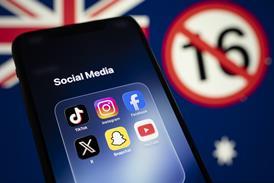
Australia’s landmark law to ban social media for children under 16 is inspiring many other countries to either do the same or seriously consider it, including England. France has just announced an under 15 social media, with Macron saying, “Our children’s brains are not for sale” – and our government is currently in a period of consultation on banning social media for under 16s as a part of a series of measures which it says are intended to protect young people’s wellbeing.
We simply try and fail, and readjust, and remember that no-one ever promised parenting would be easy
If I could become a super hacker (or something) and de-code Snapchat into the Abyss, I’d totally do it. The thing is, kids are different – my five are a microcosmic example of personalities that handle societal pressure, responsibility, fear, obedience entirely differently. We’re about to tip the teen scales with kids aged 16, 14, 12, 9 and 7. Our teens want access to their friends. Our littles want to watch K-pop Demon Hunters and sing karaoke on Spotify. Some accept and work well within our rules at home, others have a more acute sense of FOMO and are thus more inclined to test the boundaries. Do we adjust accordingly or have a blanket rule for all?
Our current family rule is smartphones at 15, TikTok is a no-go and whilst we allowed our eldest limited Snapchat, I regret it (for all the reasons) and would likely not allow the others to have it. And we’d love to push the smartphones to age 16. I can already hear my streetwise teens arguing that Jesus wants us to have community and how else are they to make plans with their friends if they don’t have SnapChat.
Woosah…olive farm olive farm olive farm olive farm…
let’s keep talking – sharing, thinking, crying, laughing, praying and investing in our communities so that our kids have a safe place to fall when they need to
Man, it’s hard. And screens are not all bad, right? As a writer, I can’t even imagine not typing out my work and simply back-spacing when I write gobbledygook. And there’s video-editing and music production and educational apps and access to learning and collab gaming and online banking (okay, that one was for me) – there really are some great things.
Quite simply, I have no answer. I want them to have the best of both worlds but not belong to either.
I want my children to love others; I want them to see their friends and build their own communities of people who they can see and touch. And I want to help facilitate this for them. And so, the olive farm remains proverbial. We simply try and fail, and readjust, and remember that no-one ever promised parenting would be easy… keep seeking God’s guidance, read Philippians 4:4 for sanity and trust that the Almighty will fix what we may have unintentionally broken.
Can you spare 5 minutes to help Premier NexGen? Answering this short survey will help us make our great content for Christian parents even better
Thankfully, we’re all in this together. Parents in London, parents in the UK, parents across the world – and no matter where you sit on the social media ban debate and how much screen time you allow your kids, we all want them to be healthy, happy contributing members of society. So, let’s keep talking – sharing, thinking, crying, laughing, praying and investing in our communities so that our kids have a safe place to fall when they need to.
This piece was originally published in February 2026 and has been repubished in light of the recent government announcements.