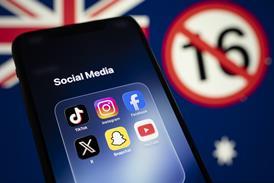






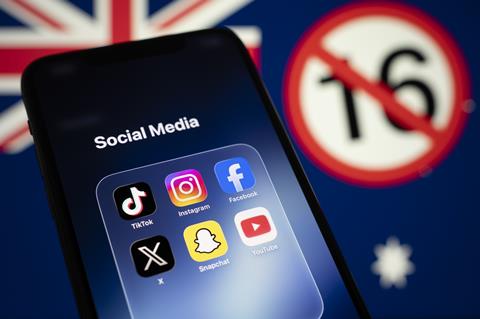
Keir Starmer has just announced a ban on social media for under-16s - this follows Australia’s lead. Two Australian’s share their thoughts. Jono Stanton is a 21-year-old musician and is not convinced that government bans can work well - however, in this article Graham Stanton, a leading youth ministry researcher and trainer, and Jono’s dad, explains why he is hopeful the new laws will be effective
For Jono’s alternative view see here.
Two months on from enacting the Social Media Minimum Age framework (SMMA) and it has not fixed anything. So far the biggest impact of the new law has been in prompting under-16s learn how to use VPNs.
But I’m still hopeful.
Of course, teenagers who wanted to, were always going to find ways around the restrictions
Young people are not flooding outdoor spaces rediscovering the joy of talking face-to-face with one another. And those who struggle with mental health have not been suddenly cured. A quick fix is not what this law was ever going to accomplish. But the hope is that the law can contribute to a culture change that will be far more influential than a superficial change in consumer behaviour.
Of course, teenagers who wanted to, were always going to find ways around the restrictions. Young people who were locked into the social media world are feeling the loss. It’s understandable that parents and support workers standing up for young people’s rights are dismissing this law as a superficial reaction from a populist government.
My hope is that this law will be a legislative canopy within which a new culture can emerge
But other conversations I’ve had are more hopeful. I’ve heard from relieved young people who’ve said, “I was looking for a way to get off social media anyway”. Parents and carers have welcomed the added weight of the law to support their parenting decisions. The complaint that their children will be the only ones who aren’t on social media now has the added counter, “but it’s the law, and it applies to everyone”.
My hope is that this law will be a legislative canopy within which a new culture can emerge. A new culture that recognises our shared responsibility to protect children from the demands of online performance anxiety and the 24-7 burden of identity construction.
Can you spare 5 minutes to help Premier NexGen? Answering this short survey will help us make our great content for Christian parents even better
The Lancet Psychiatry Commission on Youth Mental Health gave the stark but grim warning that ‘The youth mental health crisis is more than a warning sign, and now might be our last chance to act’. Led by Professor Patrick McGorry, Executive Director of the Australian youth mental health institute, Orygen, the Commission recognised the dramatic increase in social media use during adolescence. They note the potential impact of social media on brain development, and how increased social media use contributes to social pressures, mental ill health, and life satisfaction.
So, my hopefulness does not rest on this law alone. I have more confidence in the Australian community
Overall though, the Commission concluded that ‘smartphones and social media are likely to be merely one element, even if potent, in a wider and more pervasive set of harmful megatrends that are yet to be fully understood or tamed’.
So, my hopefulness does not rest on this law alone. I have more confidence in the Australian community.
This law will have effect if it can strengthen the arm of adults who are concerned for young people. I’m hopeful that this law will promote conversations that recognise the negative impact that social media has on early adolescents.
I am grateful that this law prevents the adults in those social media companies from selling their wares to teenagers
I’m sympathetic to the complaints that this law is another case of adults telling teenagers what’s good for them. Another denial of young people’s agency. But let’s not forget that social media algorithms have zero interest in promoting young people’s agency. For every ounce of empowerment that social media offers, the algorithm steals a ton. It was adults who sold this to our children. Adults who watched our young people grow addicted. I am grateful that this law prevents the adults in those social media companies from selling their wares to teenagers.
There is a very real danger that the social media ban will actually make things worse. That teenagers will be left even more isolated, banned from online interaction with no other meaningful human connection to replace it. And if all we do as a society is expect a single law to change everything, then that result becomes more likely.
So no, changing the law isn’t going to fix anything. But changing the law might help focus our attention on something that certainly needs to be fixed.
Read more:
Dreaming of escape won’t solve the tech battle for Christian parents
Why I won’t be signing a smartphone free childhood pledge
5 tips for Christian parents to manage kids’ screen time
4 ways to prepare your teenager for a social media ban
Social media isn’t the only problem young people face. And even if the law were successful in keeping every young person off social media, the adolescent mental health crisis will continue if we fail to address any of the other points of social dysfunction young people are wading through every day. But there’s little doubt that a teenager glued to their smartphone in the thrall of social media is at significant risk of diminished mental health. It may not be the smoking gun, but social media is ‘an accelerant to a fire that was already burning strongly’.
So, what if we didn’t just take the smartphones away from our teenagers, but we helped them to recognise the damage they cause? What if adults who cared about teenagers educated one another about the stress of online identity-construction? What if we acknowledged the depressive impact of dopamine addiction, the sleep deprivation from lack of self-regulation, the superficiality of comparison, and the inescapability of online bullying?
If this law can help promote that kind of conversation, then there is good reason to be hopeful.
For Jono’s alternative view see here.
This article was first published in February 2026 and is being republished in response to the latest announcement on a ban in the UK.