










Jenny Sanders thinks that tradition for tradition’s sake won’t keep young faith alive. Christian families must embrace honest questions and authentic discipleship—without watering down the gospel
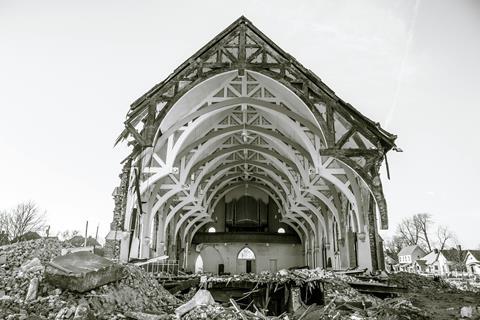
Deconstructed cheesecake, anyone? Deconstructed coffee? Everywhere you go, for better or worse, people seem to be deconstructing something.
It’s a worthwhile exercise if we’re exploring why we do what we do within the confines of any institution; but alarm bells ring when we sense that truth itself is being deconstructed. That’s a red flag because we know that it’s Jesus who is The Truth personified (John 14:6) and we shouldn’t even attempt to deconstruct Him.
If we want to make the gathering of God’s people relevant and accessible for our children, it’s time we asked some (probably) uncomfortable questions
Like it or not, we all have a culture (‘the way we do things around here’) within our family, our workplace and our social sphere. Each church has a culture all its own; each denomination or ‘flavour’ does things in a particular way. Some of those practices have been inherited from years ago and serve little practical purpose in 2026.
If we want to make the gathering of God’s people relevant and accessible for our children, it’s time we asked some (probably) uncomfortable questions about the way we do things, and why.
We should be encouraging our congregation, regardless of age to ask questions, to be thinking about the connection between faith and how it’s expressed. Answers that include the words, ‘We’ve always done it this way,’ indicate it may be time for a rethink.
If someone they’ve looked up to, or been encouraged to respect in terms of leadership, is found to have a lifestyle that doesn’t match their words, then it’s game over
We call it a ‘church service’ and that is exactly what the Sunday meetings often are: a service for the community, usually based on a school model in which the listeners do just that as an individual speaks for anything from 20 minutes to an hour. The set up is reminiscent of a school or theatre rather than a family. It operates as a production, but does any reproduction in terms of discipleship happen in this environment? Possibly; but probably not much; it’s not designed for interaction.
Consider: Jesus was The Word made flesh. Not a doctrine, not a message, not a philosophy or a preferred lifestyle but the incarnated Son of God. 2 Corinthians 3:6 says, ‘for the letter kills, but the Spirit gives life.’ Unless God’s word becomes flesh it won’t bring life to us, our children or anyone else. Jesus Himself encapsulated the life, will and commands of God lived out over thirty-three years.
Transformation is our watchword; not education cognition or an accumulation of biblical knowledge
Biblical principles and imperatives need to look like something for us and for our children who can sniff out what they deem to be hypocrisy a mile away. If we say one thing and do something else, then faith can come tumbling down like a house of cards for them. If someone they’ve looked up to, or been encouraged to respect in terms of leadership, is found to have a lifestyle that doesn’t match their words, then it’s game over.
Transformation is our watchword; not education cognition or an accumulation of biblical knowledge which is insufficient to keep us or our children walking with Jesus. Vibrant relationships are the only reality that anchors us from childhood to old age. Young people who say Christianity ‘didn’t work for me’ have missed out on the true essence of the gospel: Jesus Himself.
Read more:
How to stop your child walking away from their faith as they grow
Just as there are no perfect parents, there are no perfect leaders either. We’re all fallible but, in integrity, we need to know and show how to be vulnerable, honest and, for example, say, ‘Sorry.’ Our children should know what repentance looks like because they’ve seen it operate at home. They learn how to receive and give grace based on how it’s lived out behind closed doors from Monday through Saturday, not just hear about it conceptually on Sundays. There’s integrity in that. Similarly, what does forgiveness look like in your house? Do we forgive in the same way as God does, remembering the Lord’s Prayer in which we ask God to forgive us ‘in the same way as we forgive others’? Is that willingly, fully, graciously, frequently, without holding a grudge or revisiting the offence? This is challenging!
We’re responsible for training and equipping our children. We mustn’t send them out into the world rudderless with a vague hope they’ll somehow find Jesus in the days ahead. There will be a day when they make choices and decisions for themselves, some of which will make us weep. They cannot inherit faith or have a second-hand one. Parents are charged with the privilege of consistently pointing our precious ones to Jesus while praying in faith throughout our lives. Let’s embrace that.
Deconstructing church may prove to be the most life-giving thing we can do in order to discover the kind of relationships that existed in the early church
Following Jesus in the radical way that He calls us to means so much more than attending services. Deconstructing church may prove to be the most life-giving thing we can do in order to discover the kind of relationships that existed in the early church. The Covid lockdowns allowed some of us to explore that with greater freedom, even if not in person. Some people talked longingly about ‘going back to normal’, but where ’normality’ included stopping checking in on people, taking time to encourage one another, prioritising seeking God for ourselves rather than having His Word served to us in a curated sermon, and digging in to what worship looks like when you don’t have a band, an overhead and a cracking PA system, we’ve actually lost far more than we’ve gained.
Perhaps the questions we need to be asking are exactly some of those our children ask: ‘Why are we doing this?’
In that sense, Covid did us a favour by pulling us out of whatever our ‘normal’ was. Did we just revert once lockdowns were lifted, or did we take the time to weigh up whether the Jesus values we purport to hold in high esteem were allowed to make their mark on our church life, potentially changing our culture into something more life-giving? I’m not talking about diluting the message of the cross or formulating some slick ads to pull in those who haven’t been inside a church building within living memory. This is a deconstruction that has nothing to do with political persuasion, parenting style or popular opinion. It allows us to grapple with the foundational truths of the gospel and the realities of discipleship in the twenty-first century. Let’s raise children who swim against the cultural tide: rebels with a cause!
Perhaps the questions we need to be asking are exactly some of those our children ask: ‘Why are we doing this?’ It may not be Jesus who is boring and irrelevant to them, but the packaging we’ve surrounded Him with.
Deconstructing Jesus isn’t an option. We mustn’t ‘throw out the baby with the bathwater’; but if that ‘bathwater’ is dirty, stagnant and not fit for purpose, it does need to be thrown away.