









In a season of financial stress, it’s easy to focus on programmes, but Jenney Hererra from Acts 435 suggests that true gospel love means listening to real needs and showing up for neighbours, just like Jesus did
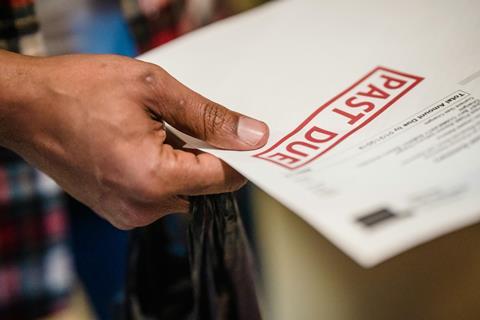
As we move into the summer of 2026, there are still countless families who are having to make impossible financial decisions just to make ends meet. The latest figures from the Joseph Rowntree Foundation show that 4.5 million children are in poverty. Even with the two-child benefit cap being lifted, only 450,000 children will benefit, leaving over 4 million still experiencing poverty. One in 10 UK households are now skipping meals and one in seven are going without some foods. Financial pressures remain with us - exacerbated by ongoing global conflict, and turbulent financial markets.
This isn’t a far-away problem - this is the reality for so many around us
This isn’t a far-away problem - this is the reality for so many around us. It may be members of our own families, neighbours on our streets, those sitting next to us in the pews, or parents and carers joining a church’s toddler group. Even though times are hard, and for many it feels like it’s a growing concern to make it through to the next paycheck, there are practical, solution-orientated steps we can all take to support; ourselves, our children, our churches, and our communities, even in the midst of so much uncertainty.
For many of the individuals and families we work with at Acts 435, we have seen time and again that even where there is careful stewardship of income, it is the sudden, unexpected costs that can tip a family over the edge. When a washing machine breaks, and children have to go to school in dirty clothes, or even if the hob or cooker stops working, there is the need to resort to sandwiches or microwaved meals. The rising fuel prices have left a dent in the budgets of those who rely on a car to get to work, and especially for those who use heating oil as their main source of energy.
Churches are structured in such a way that we often see the project, before we see the person
We work with local ‘advocates’, who know their local communities, and through their church, they are able to share their stories with would-be generous donors, to provide a practical solution for those who desperately need help with these unexpected costs and moments of crisis.
It takes a village
However, we know that we can’t do it all alone - no one church, or organisation can. This is why, if you’re struggling with your finances, we would advise you to seek help from organisations like Christians Against Poverty, or Citizens Advice. You may not know that there is support out there to help with your bills - like reduced water costs, data on your phone or a council tax reduction. These steps can help clear the fog of uncertainty and provide you with the support to get back on your feet.
How can we shift to see the person before the project?
Whether you are in a sprawling rural parish, or deep in the heart of London, there will be needs in your community - the question is whether we are perceptive enough to pick up unspoken struggles around us.
We forget that poverty takes on many forms and often needs are far more complex than what first meets the eye
Churches are structured in such a way that we often see the project, before we see the person. We run endless courses, programmes and events, all in the hope of reaching the community outside of our four walls. And many do an excellent job at doing just that. But I think we can miss the bigger picture when we get too wrapped up in logistics. We forget that poverty takes on many forms and often needs are far more complex than what first meets the eye – like what happened to Hui.*
Hui’s story
Hui was trafficked from China to the UK and was first supported by one of our partners. She desperately needed a coat, warm clothing and food, which our donors helped to provide. Our partner supported her with her asylum claim and helped her to find a job in a cafe. As an asylum seeker, she had no access to benefits. She then needed a bike to be able to get to this job, which is where the generosity of Acts 435 donors came in. This combination of holistic support, and eventually provision of asylum by the Home Office, means that Hui, in her own words, is now “fully independent.”
Handing out standardised parcels is a worthy cause, but what if their needs are greater?
Read more:
Christian families need to give with wisdom not just generosity
Trussell reports food poverty is increasing: Christian parents and churches can provide hope in these difficult times
4 ways to celebrate your child’s birthday, honour God and not break the bank
By meeting an individual, family, or parent, where they are really at, and when we listen to what their struggle is, we are far better equipped to serve them. It may look a lot messier, or ‘inefficient’ than what we are used to, but as the Church, we are called to be different. We are not an outworking of a council service (though they are essential) - we are relational human beings, and our outreach must reflect that.
I love that this is how Jesus is portrayed in the gospels. He is often to be found in the middle of a crowd, surrounded by people keen to learn from him. But what is remarkable is how he consistently seeks out the individual with a particular need - healing the woman suffering from constant bleeding, restoring the dignity of the Samaritan woman, or meeting Jarius in his moment of grief to later heal his dying daughter. When the Bible teaches us to ‘love God, and to love our neighbour’, I believe that this is the truest form of love - to come alongside those around us, to journey with them, and to be generous when the moment calls for it.
*Name changed to protect their story