










It’s natural to want to help, but true generosity means more than handing out gifts. Lisa Skinner helps parents raise children who see dignity, partnership, and lasting change as part of God’s heart for the poor
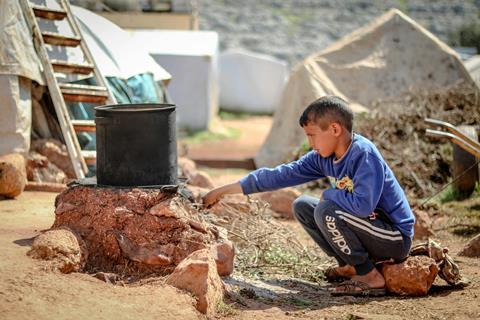
I still remember my first encounter with real, physical poverty. I was 17, visiting orphanages in Romania with my school. When I came home, I cried for days. I didn’t have the language to process what I had witnessed, and the contrast between that reality and my own life felt overwhelming. Returning to comfort, privilege and routine brought a strong sense of disorientation.
“But Mum, why didn’t you give them something?” I paused, because for the first time, I wasn’t sure the answer was as simple as it once felt
In the years that followed, I travelled to several developing countries on short-term mission trips. Each time, I became better equipped to process what I was seeing, though it never lost its impact. Gradually, my understanding of poverty grew, not just what it looks like, but why it exists. With that came a clearer sense of my responsibility as a Christian.
Fast forward twenty or so years, and I find myself in a hotel room in Wolaita, Ethiopia, phoning my children back home. I had just returned from visiting a rural community where development projects were underway. As I tried to describe the poverty I had witnessed, especially among the children, their immediate response was: “But Mum, why didn’t you give them something?” I paused, because for the first time, I wasn’t sure the answer was as simple as it once felt.
Generosity isn’t the issue. The question is how we give
It’s a natural question. But it stopped me. What would I give, and to whom? In a community of that size, who decides who receives and who goes without? And what would the longer-term impact be? In the past, I might have been inclined to reach for something tangible to give. But even on this trip, we had been wrestling with the consequences of doing just that. Having noticed makeshift footballs in the communities, some made from waste, others from twine, a colleague suggested buying a few proper ones, but what followed changed how I thought about giving. When he raised the idea of distributing them, a local employee asked important questions: who would own the balls? How would they be shared? And what if the gifts created resentment among those who didn’t receive one? I began to wonder myself: do such gifts, however well intentioned, truly help? Or can they unintentionally harm a community?
What I wanted to explain to my children was this: the goal isn’t simply to give, but to enable—to support people in providing for themselves
It struck me that my children’s instinctive response reflects something broader, a common Western mindset: if people are poor, give them something. Generosity isn’t the issue. The question is how we give. How we do so in a way that restores dignity and creates lasting change. What I wanted to explain to my children was this: the goal isn’t simply to give, but to enable—to support people in providing for themselves, rather than creating dependence on those outside their community. Because poverty is not just about lack of resources, it’s about lack of opportunity, dignity and voice.
We often quote the saying, “Give a man a fish and you feed him for a day; teach a man to fish and you feed him for a lifetime.” But perhaps a more fitting way to finish it is: “Help a man or woman learn to fish.” True support comes through partnership, standing alongside someone, not above them. This is a subtle but important distinction. And it’s not an easy concept to grasp, especially for children, and even more so for those who have never encountered poverty firsthand.
Our aim should not simply be to give things, but to support people in ways that lead to lasting transformation
It made me realise how important it is to begin teaching children early that every person is made in the image of God, with inherent worth and potential. Our role is not to rescue, only God can do that, but to walk alongside others as they discover and fulfil that potential.
That tension has followed me home. Each year, whether through church or school, my children eagerly take part in filling a shoebox for children in some of the poorest parts of the world. And each year, I facilitate this. We go to local supermarkets and discount stores, choosing items we think would delight a child aged nine to eleven, based largely on what children in our own context would enjoy. We pack the box, send it off, and feel a quiet sense of satisfaction. If we’re honest, it even softens the guilt we feel about our own excess during that season.
We do not want to give to feel good, or to be seen to be generous (Matthew 6:2)
But increasingly, I’ve found myself asking harder questions. Are these gifts truly appropriate or useful in the local context? Could similar items be sourced within that country, supporting local businesses instead? What is the environmental cost of transporting thousands of boxes across the world? And what might be achieved if those same resources were invested directly into community-led initiatives that create sustainable, long-term change? I certainly don’t have all the answers, but I’ve become more aware of the questions.
Let me be clear: giving in itself is not wrong (Deuteronomy 15:7–8, 10–11; Luke 3:11; Luke 12:33; James 2:15–16; Hebrews 13:16; 1 John 3:17–18). What matters is how we give. Our aim should not simply be to give things, but to support people in ways that lead to lasting transformation. It is not a case of us being the helpers and others being helpless. That mindset risks reinforcing a “saviour” narrative that does not reflect the heart of the Gospel. Jesus alone saves, we are not the answer to poverty. We give not because people need us, but because God loves them, and we are called to reflect that love.
Read more:
Trussell reports food poverty is increasing: Christian parents and churches can provide hope in these difficult times
I once heard someone say, “When you go to help someone, go in need yourself.” In doing so, you meet on equal ground, mutually dependent, not hierarchical. God is already at work in the world; He simply invites us to join Him. In Leviticus 19, the Lord instructs His people not to reap to the edges of their fields, but to leave provision for the poor and the foreigner. This creates a model where people can work, glean the leftovers of the land, and provide for themselves. Then in Acts 2:44, we see a community where resources were shared, and needs were met collectively. The question is not just what we give, but how we reflect that same model today.
We do not want to give to feel good, or to be seen to be generous (Matthew 6:2). We should give, but we should do so thoughtfully, intentionally, and in a way that truly loves. If we can help our children grasp this from an early age, it will shape how they see people, money, and responsibility for the rest of their lives.
We worship a God who is deeply concerned with those whom governments and societies often overlook, the poor among us. When we see them, love them, and walk alongside them, we reflect the heart of God and play our part in bringing His kingdom on earth as it is in heaven. May God help us to live this out and teach our children to do the same.