










Lisa Skinner believes that part of discipleship is helping our youth and children embrace the breadth of people in our churches and helping everyone feel that they belong
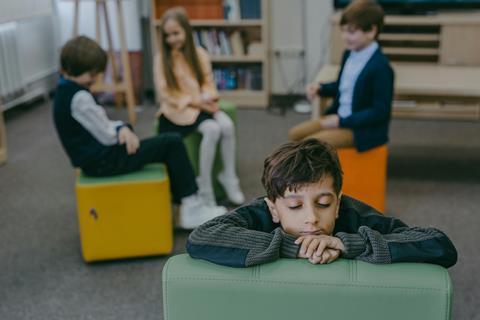
Few things trouble a parent more than seeing their child on the outside looking in. Whether it’s not being invited to a party, being left out of a group chat, or walking into church and feeling invisible, exclusion cuts deep. And if we’re honest, it still cuts deep for us too. The desire to belong is not superficial. It is fundamental. We are wired for connection.
The COVID-19 pandemic disrupted our rhythms of community in ways we are still recovering from. Necessary seasons of isolation fractured everyday interactions, the casual conversations, shared meals, and weekly gatherings that quietly anchor us. In the years since, loneliness has lingered, particularly among young people. What was already fragile has become more so. For many children and teenagers, belonging feels harder to find. And the uncomfortable truth is that sometimes church is one of those hard places.
Many young people growing up in church quietly wrestle with this tension: If I belong to God, why don’t I feel like I belong here?
Belonging is woven throughout Scripture because the desire to belong is woven into every human heart. We are made in the image of a relational God, Father, Son and Holy Spirit in perfect communion. We were created to thrive in community. So when our children struggle to find belonging where it should be found, something feels out of joint. Many young people growing up in church quietly wrestle with this tension: If I belong to God, why don’t I feel like I belong here?
Belonging to God and to one another
One of the things that continues to amaze me, despite having been a Christian for nearly 40 years, is that the Lord of all creation says to me, “I have called you by name; you are mine” (Isaiah 43:1). God chose me, not because of anything I have done. This belonging wasn’t earned; it wasn’t granted because I fit a certain mould. It was given simply because God wants me to be his. And He doesn’t just want me to belong to Him, it follows that I am to belong to His people. I am part of a body (1 Corinthians 12:27). But feeling part of a body and experiencing that reality can be two very different things.
When young people feel peripheral at church, it can quietly communicate that they are peripheral in the kingdom, even when that is not the case
Recently, I was chatting to a friend who shared how her 11-year-old daughter had been left out of a social plan by close friends. She had spent much of the week consoling her. As we talked, we recognised that even at our stage of life, despite greater emotional maturity, it still stings to hear about, or see on social media, a dinner party, a sports activity, or a friends’ trip that we weren’t part of, whether the exclusion was intentional or not. If that is true for us, how much more for our children and teenagers, who are still forming their sense of identity?
Belonging matters because it shapes confidence, faith and resilience. When young people feel peripheral at church, it can quietly communicate that they are peripheral in the kingdom, even when that is not the case.
Loving out of sameness
There are many reasons people, adults and children alike, can feel marginalised: social class, ethnicity, family background, educational setting, neurodiversity, personality differences, theological views, or simply not fitting the dominant “type.” These differences can create invisible lines.
when comfort becomes the organising principle of our relationships, belonging becomes selective
As parents, we must examine our own instincts. If I am honest, I have felt the pull to align my family with the ‘right’ circles, families in the same life stage, children who seem similar, friendships that feel easy. We tell ourselves it’s about stability or shared values. We want our children to enjoy church, to have friends, to feel comfortable. There is nothing wrong with wanting that. But when comfort becomes the organising principle of our relationships, belonging becomes selective. We begin loving out of sameness. The picture of the body in 1 Corinthians 12 is not one of uniformity. It is interdependence. Different parts. Different gifts. Different needs. All necessary. Differences will not disappear, nor should they, but they should never determine who is accepted, valued or included.
Our children are watching how we navigate this. If they see us gravitating only towards those like us, socially, culturally or theologically, they will learn to do the same. But if they see us move towards those on the margins, they will learn that too.
Can you spare 5 minutes to help Premier NexGen? Answering this short survey will help us make our great content for Christian parents even better
The radical love of Jesus
When we look at Scripture, we see a consistent pattern, God moves toward those who do not fit. Hagar, a pregnant slave fleeing into the wilderness, met by the God who sees her. Moses, born Hebrew, raised Egyptian, and rejected by both, until God calls him by name from a burning bush. Ruth, a Moabite, culturally and religiously outside Israel, yet woven into the lineage of David and ultimately of Jesus. David, overlooked in his own family, but chosen by God.
This pattern is reinforced in the Gospels. Jesus reveals His identity as Messiah to a Samaritan woman, socially rejected and religiously suspect. He calls Zacchaeus, a corrupt tax collector, down from a tree and honours him with table fellowship. He touches lepers, eats with sinners, and gathers a disciple band that includes political opposites and moral failures. Again and again, those on the margins are brought to the centre. Jesus does not build community around similarity. He builds it around grace.
When our sons and daughters learn to move towards those who are overlooked, they begin to reflect the heart of Jesus
If our churches are to reflect Him, they must be places where children who feel different are seen, known and welcomed, not merely tolerated. It is not wrong to want your child to fit in at church. But we cannot engineer belonging solely through social alignment. Nor can we outsource responsibility to youth leaders or children’s workers. Culture is shaped in pews and kitchens as much as in programmes.
How do we love differently?
It may begin with small, deliberate shifts. Notice the new parent hovering at the edge of the crèche. Speak to the teenager who stands alone after the service. Invite the single person to come and share a meal with your family. Encourage your children to widen their friendship lens rather than narrowing it.
More importantly, talk openly with your children about belonging. Help them see that feeling different does not mean being less valued. Remind them that their identity rests first in Christ, not in peer approval. Equip them to be includers, not gatekeepers. When our sons and daughters learn to move towards those who are overlooked, they begin to reflect the heart of Jesus. Belonging is not about fitting a template. It is about being woven into a people by grace.
we can model a posture that says: difference is not a threat; it is a gift
Our children will inevitably experience moments of exclusion, in school, in clubs, even in church. We cannot shield them from all of that. But we can shape communities that reflect the expansive welcome of Christ. And we can model a posture that says: difference is not a threat; it is a gift.
In a society increasingly marked by division and tribalism, the Church has a unique opportunity to live counter-culturally. Our children and young people are longing for authentic community, not curated perfection. They need to see that belonging in Christ is secure, and belonging among His people is something we actively cultivate.
We cannot control every social dynamic. But we can choose what kind of body we are helping to build. And perhaps the most powerful legacy we can leave our children is this: a church where they do not have to fit in to belong, because they are already known, already wanted, and already part of the family of God.