




The Supernaturals and the Amazing Multiplication brings spiritual gifts down to earth, weaving generosity and faith into everyday dilemmas
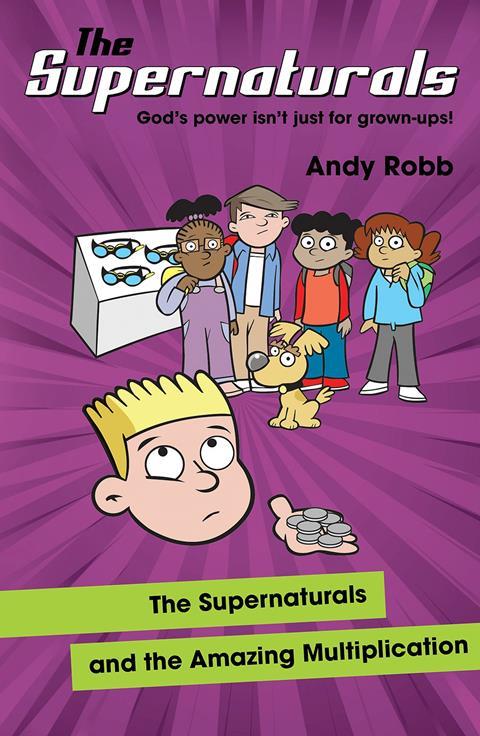
The Supernaturals series by Andy Robb sets out with an ambitious and refreshing aim: to introduce children to the gifts of the Holy Spirit in a way that feels accessible, relevant, and crucially, not reserved for grown-ups! This particular instalment, centred on generosity, blends an everyday childhood dilemma with spiritual themes, encouraging young readers to think beyond what comes naturally and step into a life shaped by faith.
Robb does well to weave in biblical concepts such as baptism and encouragement in a way that is easy for children to grasp
The story follows a gang of friends, Jonny, Teji, Carlos, Mangala and Abdoul, alongside Jonny’s dog, Yo-yo. It begins at the swimming pool, where Jonny wrestles with whether to buy Batman goggles. It’s the kind of detail that immediately grounds the story in a child’s world; my own seven-year-old was instantly hooked, not least because he owns a pair Batman goggles himself!
Robb does well to weave in biblical concepts such as baptism and encouragement in a way that is easy for children to grasp. The explanation of baptism, in particular, is clear and understandable, though it leans toward presenting it as essential for all believers. For some readers, this message may come across as theologically narrow. While baptism is a meaningful public declaration of faith, salvation is not dependent on it, so presenting it as a necessity felt somewhat misleading. Similarly, the suggestion that baptism will lead to a noticeable emotional shift may set expectations that don’t resonate with everyone’s experience.
It captures the heart of sacrificial giving in a way children can understand
One of the book’s strengths lies in its focus on encouragement, drawing inspiration from Barnabas, the “son of encouragement.” This theme is carried through the friendships in the story, showing how words and actions can build others up.
There is a moment in the book where, following the prayers of his friends, Jonny experiences a rapid shift, from seeking the approval of others to focusing on pleasing God and encouraging those around him. While this is a positive message, it feels somewhat simplified. In my experience, answers to prayer and changes of the heart often take time and can be part of a lifelong journey rather than an instant transformation. It raises the question of whether a more realistic portrayal would be helpful when communicating these ideas to children.
The overarching theme is clear: generosity reflects God’s own heart, and through giving, we demonstrate His love to others
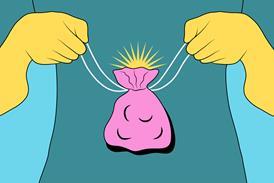
But coming back to the Batman swimming goggles, Jonny’s generous act in giving up his desire for the goggles to support a boy in need, is genuinely powerful. It captures the heart of sacrificial giving in a way children can understand. Even more compelling is how this act creates a ripple effect among his friends, reinforcing the idea that kindness multiplies.
Robb also explores how children might recognise the prompting of the Holy Spirit, describing it through thoughts, feelings of peace, remembered scripture, or certain words coming to mind. While helpful, this guidance can feel slightly prescriptive. I was struck by the suggestion that the Holy Spirit was guiding him to buy washing liquid during the weekly shop. While it’s important not to overlook God’s presence in the everyday, there is a risk of over-spiritualising ordinary decisions, potentially confusing younger readers about what constitutes divine prompting.
On the whole, this is an engaging and thought-provoking read for children
Biblical stories, including the feeding of the five thousand and the widow’s provision through Elijah, are thoughtfully integrated, reinforcing the message that God can multiply even the smallest offering. The overarching theme is clear: generosity reflects God’s own heart, and through giving, we demonstrate His love to others.
The book concludes with a straightforward explanation of sin and redemption, along with a prayer and suggested next steps, making it both a story and a gentle introduction to faith.
On the whole, this is an engaging and thought-provoking read for children. It opens up meaningful conversations about faith, generosity, and listening to God, even if some elements feel slightly idealised. My seven-year-old followed it easily over a few evenings, and the quirky illustrations helped keep him engaged throughout. More importantly, it prompted questions, which is often the mark of a worthwhile book.
It’s a series I’d happily continue exploring, both for its storytelling and for the opportunities it creates to talk more deeply about faith and the work of the Holy Spirit in everyday life.
The Supernaturals and the Amazing Multiplication can be bought from the publishers here.