





As illegal, synthetic drug vapes flood secondary schools and social media, Mary Deller from Hope Uk says that Christian parents must get wise to the risks and start honest conversations about vaping now

After prisons, the next most likely place to find an illegal, spice-laced vape in the UK, is in a secondary school.
It’s a shocking fact. Two months ago, a London borough issued an urgent warning to all stakeholders in the community, following several hospitalisations of young people under 18, linked to the use of vapes containing liquids that had been adulterated with synthetic cannabinoids, commonly known as spice. Laboratory testing subsequently confirmed that these substances had been sold in vape liquids that looked like standard products.
A cursory scan of media headlines on substances from the past couple of years will throw up story after story about children being hospitalised somewhere in the UK – as a direct result of using vapes that they had brought into school.
UK government data revealed an eightfold increase in the number of young people under 18 entering treatment for spice in 2024-5 because of vaping
Research on vapes confiscated by schools and sent for testing in a laboratory was conducted in 2024 by Professor Chris Pudney from the University of Bath. Professor Pudney discovered that 12 per cent of all the vapes tested in the lab contained the drug spice.
Not surprisingly, UK government data revealed an eightfold increase in the number of young people under 18 entering treatment for spice in 2024-5 because of vaping!
Clearly these vapes are illegal. They are sold as THC or cannabis vapes, THC being the active ingredient in the cannabis plant that produces a psychoactive effect. Spice, the synthetic version of cannabis, is much cheaper to produce than THC, making the price of these vapes very attractive to drug dealers and very affordable to customers.
Around one in five 15-year-old girls are currently vaping
Manufacturers have exploited a marketing opportunity – young people who are keen to try cannabis but don’t have much money to spend. We know it’s nothing unusual for young people to want to experiment. Vaping has become normalised amongst this age group, with the number of 11-17-year-olds who have ever tried vaping doubling within two years, from 11 per cent to 20.5 per cent (2023 data). Around one in five 15-year-old girls are currently vaping.
As with all illegal drugs, this is a transnational trade – the precursor chemical is distributed from China to Europe and the USA for the prison market, in the form of spice paper. One kilo of the precursor chemical is worth £1 million when sold as a street drug.
Most illegal vapes are being sold and distributed through social media
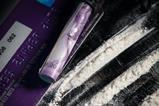
The small bottles of vape liquid are usually colourless and odourless, although the liquid may be coloured pink, blue or purple (pink is favoured in Germany). They are marketed as ‘THC’ but the vast majority will in fact be spice.
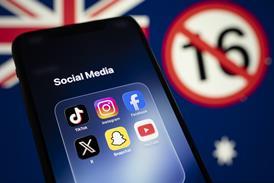
Most illegal vapes are being sold and distributed through social media – in particular TikTok and Instagram. Several named UK accounts were reported to TikTok in February this year but half of them remain active after TikTok were requested to take them down, which perhaps illustrates the scale of the challenge.
Understanding the difference between cannabis (a natural substance) and spice (a man-made one) is helpful here. Some commentators have compared the addictiveness of spice to crack cocaine. It is more potent and faster acting than cannabis. No child has yet died of vaping spice. Possibly because spice is evenly spread throughout the vape liquid and children and teenagers usually stop vaping when they feel unwell; the likelihood of a cardiac arrest is lower and they tend to go to straight to A&E if they collapse in the playground.
reactions include hallucinations, panic attacks, psychotic episodes
Synthetic cannabinoids have a long list of short- and long-term effects. They can cause your mood and perception to change, leading many users to become extremely confused or paranoid. Some become violent or self-harm while intoxicated. Other reactions include hallucinations, panic attacks, psychotic episodes, and possibly death. Because synthetic cannabinoids are much stronger than natural cannabis, it is easier to experience their unpleasant and harmful effects.
Mixing synthetic cannabinoids and alcohol is also potentially very dangerous and may lead to a greater risk of death from overdose or alcohol poisoning.
However, the main risk for young people is addiction, which may then lead to younger users being coerced into criminal activity. Education and prevention is the obvious first step in tackling the problem. Professor Pudney says: “It’s shocking how blatant and pervasive it is, but we can tackle demand by educating young people on the dangers of spice.”
Read more:
Drug use prevention amongst young people isn’t just about warnings - it’s about purpose and belonging
Ketamine is wrecking young lives - Christian parents need to know the risks
Many children are completely unaware of the risks and most adults would be hard pressed to tell the difference between a legal and an illegal vape. Since the change in UK law last year which banned the single-use disposable vapes that were so appealing to children and young people, the problem has shifted – now a vast array of different kinds of rechargeable and reusable vaping ‘systems’ are available in shops, together with the accompanying vape liquids. Unscrupulous sellers of illegal vapes, on the high street or edge of town, are willing to risk the consequences of law enforcement; Trading Standards and the police are struggling to keep up. Of course, you don’t even have to go to the shops. With a single click you can order a THC vape from a site being advertised on social media.
The Tobacco and Vapes Bill recently completed its passage through Parliament and is currently awaiting royal assent. It will give the government new powers to regulate tobacco, vaping and nicotine products, including their flavours and their packaging. The legislation aims to stop anyone born after 1st January 2009 from taking up smoking by making it illegal for retailers to sell them tobacco products. It is hoped that this will eventually lead to a ‘smoke-free generation’.
In the meantime, it is imperative that we work together – health professionals, educators, youth workers, community and church leaders, and parents and carers – to ensure that children and young teenagers are fully aware of all the risks and potential consequences of experimenting with vapes.