







Kate Orson explores how The Myth of Good Christian Parenting questions decades of popular advice and encourages Christian parents to embrace gentle, Christlike leadership at home

When I became a believer after being in the new age movement for twenty years the Christian parenting world confused me. I had left behind the ‘false light,’ for the genuine love and light of Jesus Christ. But how could following Jesus; the most loving of guides, seem to result in the harshest methods of parenting? Why were so many Christian parents advocating smacking and promoting the work of James Dobson; a man whose account of how he treated his dog was almost unbearable to read, let alone how he recommended raising children.
The book explores the last five decades of the Christian parenting industry and examines its fruit
As a parent coach, I have taught ‘gentle’ parenting methods. The science and the experience of myself and many other parents, supports the idea that connection-based parenting, with firm but loving limits is the best way to ensure good outcomes for our children. Studies have found it’s a ‘super-protective factor’ to reduce the likelihood of teen pregnancy and drug use.
While some Christian parents are open to the ideas of gentle parenting, many others are convinced that smacking is absolutely essential for raising children.
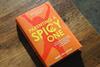
Reading The Myth of Good Christian Parenting by Kelsey Kramer McGuinness and Marisa Burt has brought me a sense of clarity about it all. The book explores the last five decades of the Christian parenting industry and examines its fruit.
The book explores the spiritual abuse that took place, when challenging but developmentally appropriate behaviour such as tantrums or sibling struggles was reframed as sin
The book traces the history of the parenting experts that became household names in the Christian community, such as Dobson and Tripp, who lacked credentials, and gave parenting advice, while they themselves were relatively inexperienced as parents. The book looks at how these authors played on parental fears about worldly corruption, and cherry-picked Bible verses to present a ‘biblical’ case for their methods.
The model created was where parents had ‘god-like’ authority, and where disobeying a parent was akin to disobeying God. The book explores the spiritual abuse that took place, when challenging but developmentally appropriate behaviour such as tantrums or sibling struggles was reframed as sin.
Decades later we are seeing the fallout of teaching children to obey ‘first time’ with a ‘happy heart’ or get a spanking. The book documents the families devastated by the poor advice given by Christian parenting experts. Family estrangements, parents struggling to parent their own children, and the deconstruction movement are the fruit of this branch of the Christian parenting industry.
One thing I really appreciated about the book is despite calling out the conservative influence it remains politically neutral
While modern day Christian parents may be unlikely to pick up a book penned by Dodson or Tripp their legacy continues in the Christian Instagram influencers who create picture perfect family lives, with information about corporal punishment in the small print. Modern day authors such as Ginger Hubbard credit Tripp as their inspiration.
One thing that I didn’t expect was how heartbreaking this book would be to read. I cried many tears, hearing about the adults struggling to make sense of their childhoods, and the regrets of parents who used the methods. The enormity of hurt caused was painful to contemplate.
As someone who didn’t grow up in the church, the book helped me to understand how an abusive parenting model managed to find its way into the homes of millions of American families, as well as being exported to other countries.
it offers the hope of healing, and repair
The book reveals how the mainstream Christian parenting industry is intertwined with the political right, and voting conservative is promoted as the only solution to protecting children from the culture war. This political entanglement was a fundamental part of how parents were manipulated, having their worst fears played upon in order to secure votes.
One thing I really appreciated about the book is despite calling out the conservative influence it remains politically neutral. It does not promote left wing ideas as an alternative, but instead draws readers towards considering Jesus, the way he taught, and the way he loved, as a model for good parenting.
What I also liked about this book is that it is for everyone. The authors never guilt or shame those deceived by the false promises of the Christian parenting industry. Instead, it offers the hope of healing, and repair. It speaks to the parents of grown children, who may wonder why their relationships with their children are strained and difficult. It also speaks to the parents of young children, who might feel lost, needing parenting advice, but not sure where to turn, when corporal punishment keeps being recommended.
Read more:
The primary place of patience in Christian parenting
8 steps to address generational trauma
The rise of permissive parenting, and how to take a gentle but biblical approach
This book is not a how-to parenting manual, but it does have good advice for how to discern when parenting experts are worth listening to, and when their claims lack validity.
One thing I reflected on as I finished this book is that our parenting instincts are God-given. We are made in the image of a God who loves us, who corrects us in ways that are designed to bring us closer to him, rather than push us away. We all sin and make parenting mistakes, but that doesn’t mean we should surrender our God-given parental instincts to powerful experts whose advice may not live up to the claims.
This book has given me a renewed sense of passion, to speak out and share, that there are better ways to parent our children. I pray that this book will be the start of a movement where the truth about ‘good Christian parenting’ is revealed.