










Domestic abuse isn’t just an adult problem, teens are at risk too. Bekah Legg has ideas for how Christian families can equip kids to recognise, resist, and never perpetrate abuse in a culture desperate for healthy boundaries
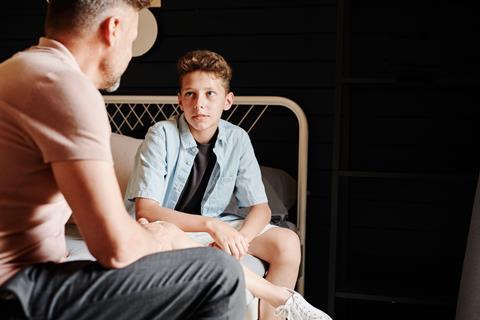
When you think of domestic abuse, you probably have a picture in your mind. Maybe a woman with a bruised face, from a particular background. It might be informed by the TV programmes that you watch, perhaps it has an EastEnders influence.
What you probably do not imagine is a teenage girl or boy, yet the Office for National Statistics released data at the end of last year, which confirms that young people are facing disproportionately high levels of domestic abuse. Figures show that a significantly higher proportion of people aged 16 to 19 years (18.2%) and 20 to 24 years (12.9%) experienced domestic abuse last year compared with those aged 25 and over.
A parent’s greatest fear is their child being hurt, but we don’t often stop to consider that it could ever be our child doing the hurting
It’s something no parent wants for their child. Every parent wants to equip their child to recognise and stay away from abuse. They pray for protection and nervously watch as their teenagers begin exploring relationships, and hope it will never happen to their son or daughter.
But every parent also needs to think about equipping their child to not be on the other side of that abuse, to not perpetrate it. A parent’s greatest fear is their child being hurt, but we don’t often stop to consider that it could ever be our child doing the hurting. But statistically, it is some of our children, and we need to think about how we can change that.
At Restored, we run parenting seminars to help parents tackle these difficult conversations with their kids - here are some of our top tips:
1) Teach them to hear ‘no’
In a world where we have learned to respect a child’s no and not make them kiss Aunty Mabel goodbye, it’s just as important that they learn to respect someone else’s ‘no’. Boundaries work two ways: if children only become used to setting them, but not respecting them, then as they grow older, it could potentially spill into serious breaches of other people’s boundaries.
If, whilst they are young, we can teach them to hear the word ‘no’ without it meaning someone is angry with them, or disappointed, or considers them less than, then as they grow up, ‘no’ is likely to be something that they respond to much more comfortably.
What matters is modelling what taking responsibility and apologising looks like
2) Teach them to take responsibility and apologise
An inability to take responsibility for behaviour is a significant red flag. Abusers blame their victims for causing their outbursts, for ‘asking for’ abuse or for generally being impossible to live with.
We must enable our children to take responsibility for their actions. Simply telling children to do it or even making the consequences less severe for truth-tellers is probably not enough. What matters is modelling what taking responsibility and apologising looks like, which might be a challenge for some of us!
Taking responsibility when you respond badly, misunderstand a situation or simply are just a bit grumpy models accountability. Responding gently when children take responsibility makes it safe for them to do so again.
helping children understand their responses to situations is a valuable tool for learning to regulate their emotions
3) Help them to understand emotions
Emotions are hard to navigate, and helping children understand their responses to situations is a valuable tool for learning to regulate their emotions. Toddlers are renowned for their tantrums, and they’re rarely displays of righteous anger at injustice. Generally, as their ability to communicate improves, so does their ability to demonstrate self-control. Anger is often a mask for other emotions: disappointment, grief, hunger, confusion, fear… Using gentle questions, we can help our children explore what they’re actually feeling and process it appropriately.
It doesn’t mean they won’t get angry, so helping them find healthy ways to express or vent it is a lifelong gift that can be learned and modelled while playing a board game.
Read more:
Child-on-child abuse: A Christian parent’s guide to keeping children safe
How Christian parents can rebuild their home after the destruction of domestic abuse
4) Make your values explicit
We impart our values to our children implicitly all the time through gestures, inadvertent conversations and repetition, but there is something to be said for naming your family’s values. Having house rules creates an opportunity to discuss them, review them, hold people to them, and set the tone when others visit.
It could look as simple as - In this house……
- we look out for each other
- we don’t let one person do all the work
- we do not shame people or put them down
- we take responsibility for the things we do and say
- we stop when we’re asked
- we look for the good in people.
helping our young people navigate that world with curiosity equips them to critically analyse what they’re hearing and seeing
5) Use careful curiosity to challenge a toxic culture
The reality is our children live in a world that is bombarding them with messaging that is toxic. With the proposed social media and nude photos legislation, hopefully, some of that will decrease, but helping our young people navigate that world with curiosity equips them to critically analyse what they’re hearing and seeing. Good questions could include:
- How do you feel about the way the boys are talking about that girl (or vice versa)?
- Do you think that’s normal behaviour? How does it make you feel?
- What would you do if you heard a conversation like this? Would there be pressure to join in?
- Everyone on this programme is so beautiful. What message is that giving to viewers, do you think? How does it make you feel?
- Do you feel pressure to be a certain way for boys/girls? Is there anything I can do to help with that?
- What do you value in other people?
- What would you love someone to notice about you and find attractive?
- How would you like to be treated in a relationship? What would be important to you in choosing to go out with someone?
Often these questions are easiest to use in response to something on TV or in conversation rather than sitting everyone down for ‘a talk’.
Having conversations about this stuff is hard, but it is crucial. Kids want to have these conversations
6) Watch our own language
It is so easy to misspeak or just not think about what we are saying around our children. Many of us would be very careful to mind our language when it comes to swearing or sharing stories that are not for young ears, but actually, this goes significantly beyond that. Inadvertently, we can perpetuate rape culture because we don’t realise that it has seeped into our language, but there are some things we can watch out for:
- Having different expectations for behaviour or achievement for boys and girls
- Asking what someone did to provoke violence or sexual violence (victim blaming)
- Making comments about someone being ‘hot’ or ‘sexy’, whether male or female
- Excusing laddish behaviour as ‘boys being boys’
- Only ever talking about men as perpetrators and women as victims (this actually reinforces the trope that men are strong and powerful and women are weak and unable to look after themselves)
Fundamentally, whether we feel like it’s true or not, we are the biggest and most consistent influence in our child’s life. Having conversations about this stuff is hard, but it is crucial. Kids want to have these conversations. I used to work in schools talking about sex and relationships, and kids would thank me because no one else gave them space to work these things out. They need to know you love them, that they can talk without judgment, and they need support navigating a big and frightening world.





















No comments yet