








President of Westminster Theological Centre, Lucy Peppiatt, counsels Christian parents to not sweat the small stuff
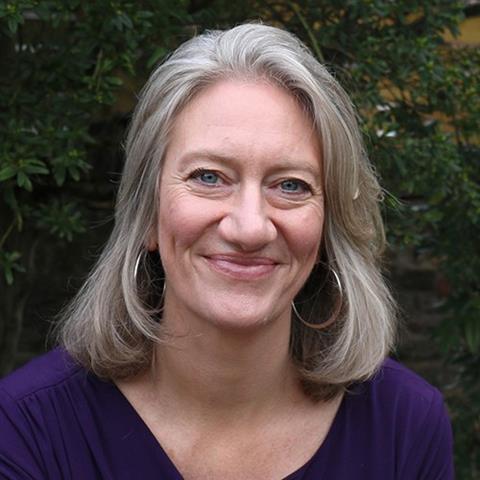
Lucy Peppiatt is the President of WTC. She holds a PhD in Theology from the University of Otago, New Zealand. She writes and speaks on a wide range of issues in the church, in particular, charismatic theology and women in the Bible. She lives in Bristol with her husband Nick, they have four grown up sons.
Lucy, tell us a bit about your life
Well, I was brought up in Wimbledon until I was 12 with four siblings. At 12, we all moved to America for four years. In America, I was at a huge high school. It was very loose—no real discipline, people smoked outside, and you could cut class without any consequences. It was super fun, but I don’t think I learnt very much! Returning to England aged 16 was hard, including adapting to the school system again. I went to boarding school for two years—having only been in state schools before, so that was a shock. Then I went to Birmingham University, did an English degree, and worked in London with the homeless afterwards.
I ended up marrying a vicar. We lived in Twickenham, then moved to Harare, Zimbabwe, for six years, which we loved. We had two children when we left the UK and two out there. Then we came back to inner-city Sheffield for five years and eventually to Bristol, where we planted a fresh expression of church in 2004 and have been for 21 years. In those years, from Harare to Bristol, I did my second degree in Divinity, a Masters in Systematic Theology, and then a PhD in Bristol.
Parenting was way more fun – and more challenging – than I expected
Had you gone to the US because of a job for one of your parents?
Yes, my dad’s job. He was a lawyer for a City of London firm expanding internationally. They needed someone to start the New York office. My mum was half-American, and my dad loved America, so they agreed to go. I was furious about moving, but we did the same to our own kids later so…
What was it like growing up in that family? What was the culture like?
My parents were both pretty libertarian. Neither really disciplined us. I think they thought we’d just kind of pick up how to behave. My mother’s father was an authoritarian Scot who smacked her, she was horrified by that and became very child-focused, reading loads about parenting. She was quite a hippie. In the 70s she wore kaftans, had pigtails and wouldn’t allow us to have processed food. My dad was a high-powered City lawyer, but he loved having a wife from a completely different world who challenged his own upbringing.
Our house was very free-range. We were left to our own devices, not pushed or tiger-parented. My childhood was books and playing in the garden. My mum ran a playgroup at home. The house was always a mess, but she didn’t bother tidying because it would just get messy again.
My parents were a massive influence. We adored them, they were brilliant, always had people over, everyone was welcome and fed
My parents were a massive influence. We adored them, they were brilliant, always had people over, everyone was welcome and fed. Hospitality was huge. My dad loved wine and always opened a good bottle. They weren’t evangelical, but there was faith there. My dad didn’t talk about it much until he was a lot older, but my mum did. She read her Bible and prayed every day; my dad prayed too, but quietly. He always said a beautiful grace on special occasions, but we didn’t have bedtime prayers or regular grace at meals.
My dad always said he was a Christian because of the Book of Common Prayer and mourned the loss of the traditional service. They brought us up with the expectation we’d believe in God, but there was no language around making a commitment to Jesus.
When we stopped going to church, my mum would gather us on Sundays, light a candle, read the Bible, and pray as our ‘service.’
How then did you arrive at your commitment to faith and how did that mature?
I also had a reaction against evangelicals, which I think was influenced by my parents’ attitudes. I thought the evangelicals I met at university were a bit fake, too smiley, not our family culture. But I loved our cousins, who were evangelical charismatics and close to us.
Read more:
Ed Drew: “Parenting isn’t complicated: love them, listen to them, keep them safe, and point them to Jesus”
James Cary: “Parenting has taught me patience, sacrificial love, and intentionality”
Natalie Williams: “what you model and invest in, even when life is hard, can build something in your children that lasts”
My uncle became a vicar, my dad stayed a lawyer. The families were close, especially my mum and my aunt, who prayed together. My cousins had an influence on me and a turning point for me was when I went on holiday to Kenya with one of my cousins and my uncle who was also my godfather. I found myself surrounded by African and British Christians who were authentic, earthy, fun, and actually working with the poor. That changed my sense of what Christians could be. It created a hunger for something more. I knew Christianity was true but realised I’d never actually made a personal commitment. At 23, at a Holy Spirit day, I heard a woman describe giving her life to Jesus at 7, and I realised I’d never done that. So I did.
I was careful with my family, knowing they thought I was already a Christian, which in many ways I was. But they could tell something had shifted. My dad was a bit nervous when I brought Nick (my husband, then my uncle’s curate) home, but once my dad realised Nick liked wine and laughed at his jokes, he relaxed!
If you could thank your parents for something related to your faith, what would it be?
The love in our family, and the way they loved us, was wonderful. It gave us a sense of value from birth, and that makes understanding God’s love a short step. I know as a pastor how hard it is for people to believe God loves them. My mother, from a much more traumatic background, struggled with that too. My dad never doubted God’s love.
Imagine your children will come to God, even if they look like they won’t
What sort of words come to mind that encapsulate your feelings about being a mother?
It is just such a huge privilege. We didn’t plan our first child, but having four children felt like an unbelievable blessing. Parenting was way more fun – and more challenging – than I expected. You don’t know how your family will develop. Both Nick and I had siblings who caused our parents heartache, and that was hard to watch. But both families saw reconciliation, which was lovely.
Watching our children learn to love each other, talk together, and pray together was precious. That was one of the things I wanted most, along with them loving and knowing God.
By the time they were 10 or 11, we moved to being more like my parents, less controlling, choosing our battles, and not sweating the small stuff
In terms of how you were parented, where do you see the influence and the similarities and where do you see the differences in how you have parented?
When our boys were young, we were definitely stricter than my parents; it was just survival, really, with four boys. In Zimbabwe, parenting was stricter and that rubbed off on us. My mother didn’t like that, but it was necessary to manage the chaos!
By the time they were 10 or 11, we moved to being more like my parents, less controlling, choosing our battles, and not sweating the small stuff. Smoking, swearing and drinking as teens, for example, weren’t a big deal to us; drugs were the line. That was my dad’s one big rule; he told us not to do drugs, largely because of social and legal consequences, not primarily for health reasons.
We had family nights, and I made them say something nice about each other, which they hated at the time, but now they’re great at affirming one another
What’s worked well in terms of parenting for faith?
Food! The table was the centre of my family growing up, and I wanted that for my kids. Everyone was expected to eat together, no phones at the table. That rule started as soon as mobile phones appeared. It created space for them to talk to each other. We had family nights, and I made them say something nice about each other, which they hated at the time, but now they’re great at affirming one another. On birthdays, we’d all pile on with compliments.
We always said grace before meals—my husband brought that from his upbringing. When they were teens, the rule was just, “Thank God for this good food, Amen.” If a guest said a long grace, the boys would interrupt!
With four boys, I wish we’d worked harder at talking more about sex and relationships
We also had people living with us – other Christians, often older than our boys. At one point eight of us were in the house. That brought fun and also curbed the boys’ rudeness – they behaved better with someone else around. One of those lodgers is still a great friend of the whole family. He encouraged the boys with music and helped teach them guitar. Music became a big thing for them and I insisted everyone learn an instrument.
What were the challenges? What didn’t work so well?
With four boys, I wish we’d worked harder at talking more about sex and relationships. The boys would push us away if we raised the subject and we backed off. I think I should have pushed it more, had those conversations even if they resisted. My husband’s family never discussed those things, so he was even more reluctant. Looking back, I wish we’d talked more about those topics—it would have helped them navigate teenage years.
If you could give yourself a piece of advice the day before your first boy was born, what would it be?
Pray a lot and try as hard as possible to stay light-hearted. Light-hearted parents can bring joy into a household. When we did that, it created a happier family, even in hard times.
my husband taught them how to read and memorise scripture, which all our kids have carried on
As for faith, we did say grace, had family evenings where we’d pray and affirm each other. We also included them in our own prayer lives and I think that helped them to understand how to relate to God. One of the big things is that my husband taught them how to read and memorise scripture, which all our kids have carried on. That came from his background and is something they all share.
Is there anything else you’d like to say to Christian parents?
Imagine your children will come to God, even if they look like they won’t. Children pick up quickly on parental anxiety about them straying and can feel they’re a disappointment if they’re not Christians. My parents were laid-back about it, which helped us feel held, not pushed. That gentle confidence and holding on was a very good thing.