








Director of Parenting & Discipleship at The Center for Faith, Sexuality, and Gender, Laurie Krieg, wants to avoid being overly intentional in her parenting but nevertheless ground all her family does in Bible and prayer
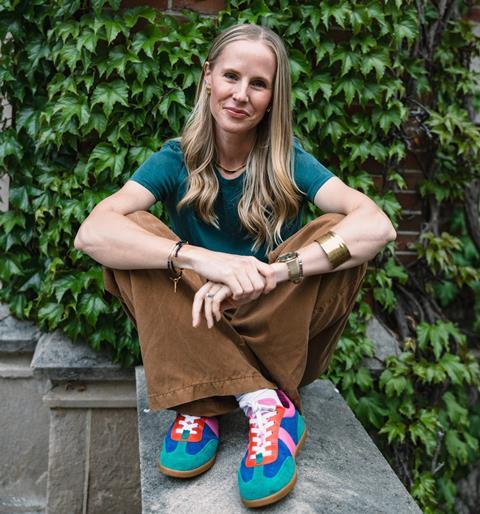
Laurie Krieg is the Director of Parenting & Discipleship at The Center for Faith, Sexuality, and Gender, where she also serves as a founding board member. Laurie has a master’s in evangelism and leadership from Wheaton Graduate School, and she and her husband, Matt, are the co-hosts of the Hole in My Heart Podcast, co-authors of An Impossible Marriage (IVP 2020), and Raising Wise Kids in a Sexually Broken World (IVP 2026). Laurie and Matt live in West Michigan with their three kids.
Laurie, tell us a little bit about yourself
I’m the 9th of 12 children—so there are eleven other versions of me running around! My dad was an entrepreneur, a lawyer, a judge, and a scientist, so we moved a lot. Every three years or so, we’d be in a new place. That meant I was always really connected to my family, but I also grew up asking, “Who really sees, knows and loves me?” I didn’t understand, even as a Christian kid, that I was looking to people to fill what only God could.
Having eleven siblings was like a cross between the best summer camp, a one-room schoolhouse, and The Hunger Games
Growing up, I tried to fill that hole with classic Christian performance and people-pleasing. In college, I had a secret same-sex relationship that conflicted with my relationship with God. It felt like scratching a bug bite—it never fully satisfied. A therapist-mentor named Carolyn discipled me and helped me see my deeper needs, and I realised Jesus could meet those, if not fully on this side of eternity, then in eternity. Her discipleship empowered me to keep surrendering to Jesus. Not everyone who has my journey with same-sex attractions is called to marriage, but I was. God led my heart toward one man, Matt, whom I married. We’ve been married almost 17 years and have three kids.
I studied writing and communication at a small Christian university in Michigan, was a newspaper reporter, and then felt called to ministry. For over 10 years, I’ve worked at the intersection of human sexuality and the church, running a nonprofit and writing books. My husband is a licensed mental health therapist, so together we do a lot of teaching and training in this space.
some of the language of the 80s and 90s—“you’re either in or out”—I’d challenge now, as well as the health and wealth gospel influence
What was home life like growing up in such a big family?
My dad was kind but ran a tight ship–you would have to with 12 kids! Having eleven siblings was like a cross between the best summer camp, a one-room schoolhouse, and The Hunger Games (because if you didn’t eat quickly, you might not get any food!). Jesus was really emphasised in our home. However, in the 80s and 90s, in wider evangelical church culture, there was also a strong “us versus them” vibe about culture and faith, especially around anything LGBTQ.
My sisters, especially the older ones, were like extra parents to me. With so many siblings, you really learned to care for each other. My parents were always busy, so a lot of nurture came from each other as kids.
We moved a lot and usually attended big churches—mega-churches, really—because with such a big family we needed a big church to accommodate us. Some of the churches were pretty vanilla, but in the early 2000s, we went to churches that really sought Jesus and helped me grow.
Faithfulness isn’t flashy, but it’s what matters most
How did your parents influence your faith?
My mom’s legacy is prayer—each day she wrote our initials down and prayed over each of us while she traced our initials over and over. She also taught us Bible verses, which I now make my kids do. Those verses are in my DNA, even though as a kid I found it boring. My dad would even pay us to memorise passages! That’s a legacy I’m grateful for.
On the flip side, some of the language of the 80s and 90s—“you’re either in or out”—I’d challenge now, as well as the health and wealth gospel influence. Even today, I have to remind myself that God is still good in suffering, not just when life is easy.
One big challenge is teaching my kids both strength and love—not just to “punch back,” but to respond with compassion
What aspects of your parents’ faith have you carried forward?
Definitely the prayer and Bible legacy. But I’ve also had to untangle some cultural baggage—like thinking God is good only when life is good. I’m learning that the greatest affirmation comes from Jesus acknowledging us before the Father, not from easy circumstances or applause.
If you could thank your parents for one thing in your spiritual journey, what would it be?
Their faithfulness. My parents are still married, still seeking Jesus after 50-plus years. Faithfulness isn’t flashy, but it’s what matters most. I thank them for not giving up, for praying for me, and for teaching me Scripture.
Just enjoy them. Put the phone down, look your child in the eyes, and savour each moment
Your own children are 11, 9, and 6. What have been your overriding feelings about motherhood?
There was a time I didn’t know if I’d get married or have kids, but God gave me a vision of two daughters. Now, being a mum is such a joy—even on hard days. I may have to wait until my kids are peacefully sleeping to feel that joy some days, but I’m so thankful for them
What challenges have you faced as a Christian mum?
The world is tough on kids—even just dealing with bullies at school. I have a history of abuse myself, so I’m very aware of how cruel people can be. One big challenge is teaching my kids both strength and love—not just to “punch back,” but to respond with compassion.
Read more:
Paul Mallard: “Our job as parents is to give our children both roots and wings”
Kat Osborn: “I always knew I was loved by my parents and by God, which created a deep sense of safety”
Justin Stuart: “the biggest stage that you will ever stand on is in front of your family”
What’s worked well in raising your kids in the faith?
Prayer. I pray for them often , especially when I don’t know what else to do. We also read the Bible together—ideally five minutes a day, and then ask what stands out to them. Not pushing for a “moral of the story,” just inviting their thoughts and praying together. Caring about what they say and what matters to them has been powerful.
What hasn’t worked so well?
Trying to force “big Jesus moments” or being overly intentional. Sometimes my questions annoy them! Some faith-based shows, like The Chosen, just go over their heads at this age. When I try to orchestrate a spiritual moment, it can sometimes backfire.
If you could give yourself one piece of advice before you becaome a mum, what would it be?
Just enjoy them. Put the phone down, look your child in the eyes, and savour each moment.
Any final thoughts on Christian parenting?
Pray, study, wing it, and repeat! Say “I’m sorry” and “I forgive you” a thousand times along the way. Keep learning how to care for your kids in each moment, and don’t be afraid to try, fail, and try again.