





Parental faithfulness and stability in the face of adversity is crucial in childhood - Kat Osborn, Co-CEO of Safe Families, knows this deeply from personal experience
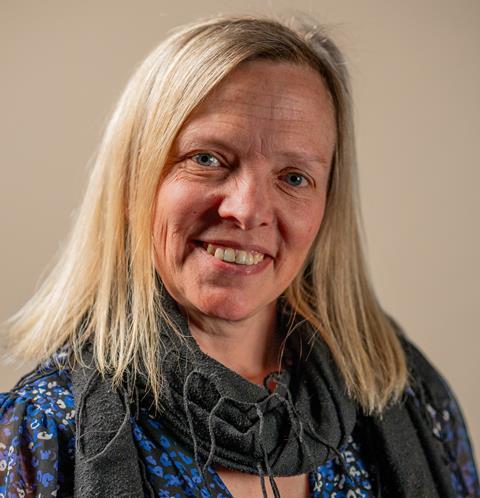
Kat, give us an idea of what it was like growing up in your family?
I was an only child, but our home never felt empty. My parents were Christians and church was part of life from as early as I can remember. My parents led a home group and had an incredibly hospitable home. We often had international students staying with us, and Christmas was never just the three of us, it was always a full table.
From ages two to eight, my parents fostered children. I have vivid memories of teenagers living with us, like Liz, who had a dog called Rex that ate all our Cellotape, and Xenia, who seemed impossibly cool to my eight-year-old self. Those experiences shaped my view of home as a place of welcome.
My mum’s faith through all of her suffering was extraordinary
However, my parents stopped fostering when my mum’s health deteriorated, and this really shaped my teenage years. Before I was born, she was miraculously healed of severe arthritis after prayer. For the first four years of my life, she was well. But after a miscarriage, her arthritis returned, and later she faced cancer, kidney failure, and more.
How did your mum’s illness affect your parent’s faith, and how did that impact you as a teenager?
My mum’s faith through all of her suffering was extraordinary. She used to talk to me about how she knew the power of a God who heals, and she also knew the power of a God who was with her in the absence of healing.
As a teenager, I prayed desperately for her healing, and it didn’t make sense to me that God had healed her once but wasn’t healing her again. My dad was steady through it all, he used to say that you play with the cards you’re dealt in life and God is always faithful. Mum definitely wanted to be healed again but she learnt to be content with God’s presence. She would have beautiful encounters when she would stay in hospital for three to six months at a time and she would always make new friends and tell those in the beds next to her about Jesus, allowing God to use suffering to meet with others and share him.
Hospitality was normal for us. Christmas wasn’t about closing the door; it was about opening it wide
As an adult, this experience has affected my faith a lot: it still makes prayer difficult because I’m not sure whether God answers my prayers, as he didn’t answer the prayer to heal my mum a second time. Yet at the same time, I can see how he did answer my mum’s prayers, because he was faithful, and he came close to her. I guess this experience reframed what I see as answered prayer and I’ve learnt to see him in little moments - as my mum did.
Read more:
Justin Stuart: ‘the biggest stage that you will ever stand on is in front of your family’
Josie Soden: “I realised you’re not the same after each child—you’re reborn and remoulded as a mother”
Allan Finnegan: “Don’t get so caught up in church or work that you miss out on your family”
Was there a moment when faith became your own?
Yes. When I was eight, my parents sent me on a Crusader (now Urban Saints) holiday. One night, after a Bible study on Jesus’ crucifixion, I realized: if he loved me enough to die for me, I needed to respond. So, I prayed the prayer they offered. That was the moment my faith became personal, not just my parents’ faith.
Since then, I’ve never walked away, but I’ve had to re-choose faith at different points: through teenage years, suffering, overseas work and life’s challenges. Faith is a choice and I’ve learned to make it again and again.
You mentioned that hospitality was an important part of your upbringing. How did that shape you?
Hospitality was normal for us. Christmas wasn’t about closing the door; it was about opening it wide. Even now, I rarely spend Christmas with just my dad. Instead, I’ll spend Christmas with those I care about, the people who have become like family to me. That value led me to start a Christmas lunch when I worked for a church in London, which grew to 350 people, including homeless and international guests all sharing one table. We didn’t have a divide between volunteers helping and then others receiving the food. Rather, everyone pitched in to cook, serve and clean up as a big family!
Growing up, I always knew I was loved by my parents and by God, which created a deep sense of safety
When mum was in hospital for weeks at a time, our church stepped in. They had a rota to feed me after school and make sure I did homework. At the time, it felt normal; now I see how extraordinary it was.
That experience shaped my passion for Safe Families and Home for Good, which help churches offer that same community and support to others.
And finally, what did your parents teach you about God’s character?
Growing up, I always knew I was loved by my parents and by God, which created a deep sense of safety. I understood that their love was unconditional, though I’m not entirely sure how they communicated that, especially since we did not say it out loud all the time. Still, I knew their care was not tied to exam results or future career choices; it was simply given, freely and beautifully. Because of that, the possibility of the unconditional love of God was never particularly complicated for me to understand.