




Allan Finnegan’s terminal cancer diagnosis has made him reflect deeply on life and faith as a Baptist minister, stand-up comedian and being a dad
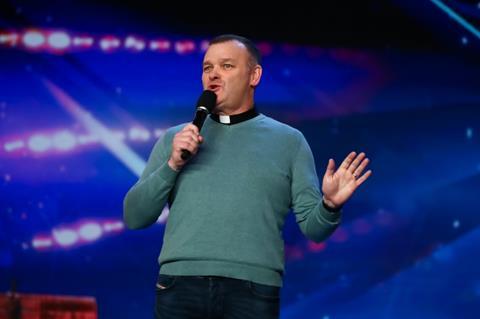
Allan, what was life like growing up?
I’m from Bootle in north Liverpool, which at one point was the second most deprived place in the country. But I knew no different, it was just home. Life was just the way it was for me – working class, terraced house, both parents worked, and we were one of the first on our street to get a telephone, so we thought we were doing all right!
The sense of community was strong. You knew everyone in your street, and people looked out for each other. That’s something I miss now
I only realised how different life was elsewhere when I became a Christian and started travelling, meeting people from other backgrounds. I remember being shocked hearing how many people went to university – no one from my world talked about it. If you were clever, you went to work at the Giro (a publicly owned bank in Bootle); if not, you went to the factory floor or building sites. That was it.
There were challenges – places you avoided for your own safety, gangs, and a general lack of aspiration. But there were positives too. The sense of community was strong. You knew everyone in your street, and people looked out for each other. That’s something I miss now.
How did you become a Christian and where did Baptist ministry come into your story?
I met a girl at a party – Joyce, who’s now my wife. She’d stopped going to church, but her parents wanted her to get me to go. To keep them happy, we went to church – mainly for the Sunday afternoon service so we could go to the pub afterwards.
I ended up at a wild, charismatic meeting – the Full Gospel Business Men’s Fellowship International. It was mad – guitars, arms in the air, singing. But then a guy spoke, a convert from Islam, and I remember thinking, “You really believe this. If that’s Christianity, I want it.” I put my hand up during the altar call and later, after a “God appointment” at Joyce’s house, I prayed with people there and committed my life to Jesus. From that moment, it was full on.
I always felt a bit of an imposter
I became involved in church, took on more responsibility, and after the minister left, I ended up doing the role, even though I hadn’t been to college. I always felt a bit of an imposter – comparing myself to the last minister, feeling I didn’t know the Bible well enough, or wasn’t holy enough. That insecurity dogged me, though people seemed to like me and I loved being with people.
You then moved into comedy – but you were still a church minister with a young family and you were doing a degree, so why add extra stress to that?
I was in a preaching class, and the tutor said preaching was out of date—no one communicates one person, one mic anymore. I disagreed, having just seen Peter Kay play to thousands. That led to a project comparing comedy and preaching. I did a comedy course, not intending to become a comedian, but someone pushed me to do a gig and it just kept going from there.
Your comedy led you to perform in the semifinals of Britain’s Got Talent but then after a high like that you ended up with the tragic news of a cancer diagnosis. How did that happen?
It was right after BGT, during COVID, so what should have been a big break meant nothing—no gigs. My confidence was low, and then I noticed a flicker in my eye. I saw the optician, who found a “freckle.” Long story short, it turned out to be ocular melanoma—eye cancer. It’s deadly, and I had a bad version of it. I lost confidence, had to stop gigging, and felt everything that defined me was closing down—first comedy, then church, then even doing practical jobs around the house.
Read more:
Lucy Peppiatt: “My parents were laid-back about faith, which helped us feel held, not pushed”
Ryan Frederick: Christian parents need to “say no to good things to say yes to the right things”
Sally Lloyd-Jones: “God chose you specifically for your children and your children for you”
How’s all this impacted your life, your faith, and your views of God?
It’s mad. The Christianity I was brought up in told you you’re special, God’s got a plan for your life, and then to be floored with this…… It does affect your faith. The hardest bit was I couldn’t just say God didn’t exist. That would have been easier! Instead, I had to rethink my faith, and I’m still doing that, but I’m happier with where I am now.
Most of our churches want people to leave feeling good, but there’s value in being real about pain and struggle
There’s a deeper richness to God. I’ve been reflecting a lot on Jesus’ “My God, my God, why have you forsaken me?” There’s such depth of emotion there. Suffering has forced me to wrestle with lament and with rebuilding faith. I still see the goodness of God and God’s people, and it humbles you. If you think you’re special, you become a bit self-focused, but all this strips that away.
I think I’ve got one more sermon left in me – it’ll be about lament, about being honest with God. Most of our churches want people to leave feeling good, but there’s value in being real about pain and struggle.
You also say that your cancer years have been the best years of your life because you had to re-evaluate and spend more time with friends and family. You’ve got two grown-up daughters who are both married and you have a grandchild. What words describe your thoughts and feelings on being a dad?
The very first word is responsibility. Suddenly you’ve got this child in your hands, and you think, “I’ve got to look after this now.” It’s a huge responsibility that changed my life. Being a dad can do your head in, especially during the teenage years, but if you stick with it, it’s worth it. We’re still close as a family, see each other regularly, go on holidays together – it’s great.
It’s a privilege to be a dad. You get to shape these little lives. They don’t always turn out the way you want, but sticking with them, loving them unconditionally – that’s what matters.
Stick with your kids and love them unconditionally. Be flexible as they grow
What about challenges in nurturing faith in your girls, especially as a minister?
I didn’t become a minister until they were about 13 and 15, probably the worst age for it! They didn’t tell anyone at school I was a minister – they just said I was a builder. We took them to church, went to everything, and there was a real sense of extended family at church – community days, events, lots going on.
When kids are little, they just go along with it; your word is gospel. But as they get older, they need to make up their own minds. It was easier when they were young, but harder as they hit senior school. I realised it was better to be flexible and let them make some decisions about church, rather than force them. That flexibility helped. There were arguments, but I didn’t want to be the kind of parent whose kids ended up hating them. You’ve got to love your kids unconditionally and hope they’ll love you back.
If you could wind the clock back to the day before your first child was born, what advice would you give yourself?
Be around more. Don’t be too busy with church. Get more sleep when the baby sleeps! But mainly, just be there – especially at key moments. I know you have to earn money, but I spent way too many nights at church meetings that weren’t really needed. It became our social world. I hear similar stories from other parents in ministry – kids feel their parents were more present at church than at home, and now they’re wary of over-committing. The positive is that our kids were part of church life; the negative is the risk of burnout or resentment.
Any final thoughts for Christian parents?
Stick with your kids and love them unconditionally. Be flexible as they grow. Don’t get so caught up in church or work that you miss out on your family. And don’t be afraid to let your kids see that you don’t have it all together – sometimes, being real is the best thing you can do for them.
Allan’s book about his life (I Didn’t Ask for Any of This) is out in January and is available for pre-order here.