








Paul Mallard: “Our job as parents is to give our children both roots and wings”

With four children and nine grandchildren, Director for the West Midlands FIEC, Paul Mallard, reflects on decades of parenting and grandparenting experience - bringing back memories of wonder and terror and the centrality of the gospel in raising children
Paul Mallard served as a pastor for 40 years in three different churches. He now works as Director for the West Midlands for the FIEC (Fellowship of Independent Evangelical Churches, UK), supporting churches and their leaders across the region. He’s the author of several books, including Invest Your Disappointments and Heaven: Living with Eternity in View. He and his wife Edrie have four children and eight grandchildren.
Let’s start off with the two-minute version of your life. Where were you born? What have you done in life and where are you now?
I was born in Birmingham to a working-class family. My dad worked nights at Cadbury’s Chocolate Factory. My parents weren’t Christians. When I was 11, I became a Christian through the local church’s children’s work. Later, I studied theology at Cambridge, and by 18 I’d fallen in love with Edrey, who was in my youth group and, funnily enough, went to the same junior school as me. We married, and I started out as a teacher for five years before being called into pastoral ministry. I served as a pastor for 40 years in three different churches. Now I’m semi-retired—I still preach most Sundays, lecture at London Seminary, and work for the FIEC a couple of days a week. We have four children, nine grandchildren, and God willing, a tenth on the way.
What was it like growing up? What was the family culture? Was it strict, laissez-faire, creative
It was a home full of love for me and my sister. My dad was a straightforward man, left school at 14 so he wasn’t highly educated. My mum was very sharp but also left school early. There wasn’t a lot of high culture in the house, but there was a lot of love. My mum never once said she loved me, but I never doubted it—she showed it in everything she did. She was an old-fashioned, working-class matriarch—wouldn’t let me in the kitchen, because that’s what mothers did. She just piled on the love. My dad was kind, and because he’d had a very strict father, he set out not to be strict himself. There wasn’t much discipline because it wasn’t needed in that loving environment.
How do you think they influenced you, especially regarding faith?
Neither were Christians when I was growing up, but ……
Want to read more? Register FREE or SIGN IN now!

To read this article, and 1000s more reviews, advice, ideas and support for parenting in faith, REGISTER FREE now. PLUS we’ll send a weekly email newsletter so you don’t miss anything.
By registering, you get the FREE e-book Are smartphones rewiring my kid’s brain?
If you are already registered, a NexGen subscriber, or registered with another Premier brand, simply SIGN IN with your existing login details.
Related articles
-
 Article
This practical guide equips and empowers grandparents to pass on their Christian faith
The Grandparents’ Guide to Passing on Faith seeks to give grandparents the confidence and tools to share their faith with children — tackling everything from tricky questions to geographical distance. Sarah Holmes, one of the authors, tells us more about it.
-
 Article
3 truths every Christian grandparent needs to know
Even when distance, doubt or family challenges make it tough, Becky Sedgwick from Parenting for Faith believes that grandparents have a unique influence that can help the next generation know God’s love
-
 Article
John Greenall: “Remember, your child needs you more than your expertise”
Paediatrician and dad John Greenall reflects on lessons from his upbringing, the power of community, and why ordinary moments matter most for Christian parents raising confident, faith-filled kids
More from Interviews
-
 Article
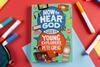
Pete Greig’s new book helps kids and parents listen to God
Lucy Rycroft interviews Pete Greig about his new book for children and discovers a creative new resource that helps families move past busyness and noise, making space for God to speak through scripture, prayer, and the world around them
-
 Article
Chip Kendall: “Don’t be afraid of tough love—help your kids face their struggles honestly and let them know you’re there”
Singer-songwriter Chip Kendall reflects on the power of faith, tenacity, devotion and the arts in raising the next generation for Jesus
-
 Article
Laurie Krieg on parenting: “Say ‘I’m sorry’ and ‘I forgive you’ a thousand times”
Director of Parenting & Discipleship at The Center for Faith, Sexuality, and Gender, Laurie Krieg, wants to avoid being overly intentional in her parenting but nevertheless ground all her family does in Bible and prayer
- Topics A-Z
- Writers A-Z
- © 2025 NexGen














Site powered by Webvision Cloud