








Laurie Krieg explains how her new book equips Christian parents with the gospel foundations, practical tools, and real-life language needed to guide children wisely in a sexually broken world
Laurie Krieg is the Director of Parenting & Discipleship at The Center for Faith, Sexuality, and Gender, where she also serves as a founding board member. Laurie has a master’s in evangelism and leadership from Wheaton Graduate School, and she and her husband, Matt, are the co-hosts of the Hole in My Heart Podcast, co-authors of An Impossible Marriage (IVP 2020), and Raising Wise Kids in a Sexually Broken World (IVP 2026). Laurie and Matt live in West Michigan with their three kids.
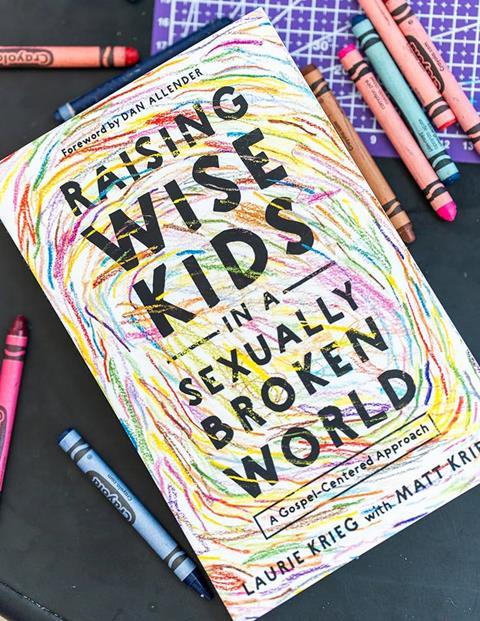
What is the book about Laurie and what are you trying to do with it?
The book is about equipping parents with a framework to understand this sexually broken world and then giving them language to help equip their kids. I want parents to get it first, then teach their kids so what they say comes from a heart and mind that understands.
Why did you feel the need to write the book now and in this way?
I couldn’t find a parenting book that had everything I wanted—one that didn’t just focus on marriage or pornography or sexual abuse prevention. Parents are busy. I wanted to cover gospel, marriage and singleness, gender, sex, pornography prevention, and body safety in one place. I wanted parents to understand and then know how to talk to their kids.
the gospel truly is God’s flourishing path. So we have to start there
The first two chapters are about the gospel. Why did you start there?
When I talk to parents, I find we often don’t really understand the gospel. We use the word, but don’t always get it. In sexuality conversations, people want to jump straight to “no same-sex marriage, no pornography,” but the “no” only makes sense because of the gospel. This isn’t just a code word for Christians—the gospel truly is God’s flourishing path. So we have to start there.
You pair chapters as ‘laying a foundation’ and ‘walking the foundation’. Why is that important?
As parents, we can be told what’s true and repeat it, but parenting isn’t scripted. Your kid might ask about something in the grocery store, and if you only have a script, you won’t know how to respond. If you have the foundation in you, you can flex with your kids’ questions in real life.
I don’t want my kids to just be rule followers; I want them to know God’s “yes” and the reasons for his boundaries
You use a lot of Bible and also social research. Why both?
In the 80s and 90s, a lot of parenting teaching was based just on the book of Proverbs, not always grounded in the gospel or in human development research. I wanted to avoid repeating that. God made us as holistic people, so I wanted to bring together human development, the Bible’s big story, and practical equipping for parents.
What are the main mistakes parents make when talking about sex and sexuality?
The biggest mistake is teaching from a theology of “no”— “don’t do this”, “don’t do that”, and then shaming or avoiding the conversation. When we speak out of fear, our brains shut down. Research shows that kids follow rules more when they understand the beauty and the “why” underneath them. I don’t want my kids to just be rule followers; I want them to know God’s “yes” and the reasons for his boundaries.
If we don’t process our own background with the Lord, we’ll either swing to extremes or repeat our own stories
You write that we need to lead from our scars, not our wounds. Can you explain?
Our stories didn’t begin or restart when our kids were born—our pre-parenting stories matter. If we don’t process our own background with the Lord, we’ll either swing to extremes or repeat our own stories. For example, I knew a mum furious at her son’s choices who was actually carrying pain from her husband’s long-term porn addiction. If we don’t bring our stories to God, they’ll control us, so we need to work from our scars (healed places), not our wounds.
You talk a lot about age appropriateness and use six questions to help decide what to say and when. Can you say more?
We have to ask ourselves if we’re being too explicit, if we can speak truthfully and lovingly, and if our response will help our kids feel safe talking to us. Sometimes we over-explain or under-explain, especially with our first kids. Building in a pause before we speak helps us avoid just doing whatever is our default.
We want our kids to choose Jesus, not just avoid bad stuff
Does a lot of this come down to basic good parenting—trust and secure attachment?
Totally, but when it comes to sexuality, even good parents can freeze up or rant. We all have stories around this topic, and most of us didn’t have great puberty talks growing up. You have to have trust to talk about intimate things with your kids, but for some reason, we often lose it on this topic and either clam up or are at a loss to know what to say.
You balance practical tips with foundational mindsets—how do these fit together?
You can’t have the practical without the foundational. For example, in porn prevention, we talk a lot about mindsets. Putting a blocker on your computer is great, but it doesn’t get to the heart. We want our kids to choose Jesus, not just avoid bad stuff. It starts before there’s a problem—teaching them not to take their pain to things, but to God.
Pray, study, wing it, and keep going
Anything else you want to say about the book?
Parents, we can do hard things. It doesn’t require aggression or passivity. Pray, study, wing it, and keep going. God is faithful and loves our kids more than we do. Apologise, forgive, and keep trying.
What’s the feedback been like so far?
People are thankful and say everyone needs to read this. Some find parts basic, but most parents haven’t studied this stuff, so the basics are helpful. I didn’t want parents to need a PhD to talk to their kids about these things.
Raising Wise Kids in a Sexually Broken World (IVP 2026) is available now.