










As AI chatbots offer synthetic connection, Christian families must show children what true love, presence, and community look like—so they never settle for less than the real thing
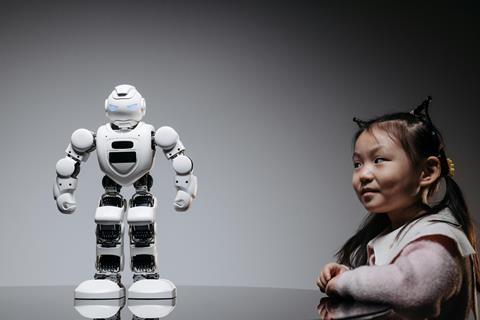
My friend’s daughter came home from school last week puzzled. She announced that her seven-year-old classmate had been talking to an AI chatbot. “It said it was her best friend,” she told her mum, half fascinated, half confused. “But it’s not real, is it?”
When my friend told me this, I paused. Not because the answer is complicated — it isn’t — but because it made me wonder what question that little girl was really asking. And I think it goes far deeper than software. She was asking: What makes someone real? What makes a relationship real?
AI chatbots are extraordinarily good at sounding like they care
If you’re a parent, grandparent or carer, you’re going to face this question too — if you haven’t already. And it’s really important that we’ve thought this through.
The loneliest generation
Here’s the uncomfortable backdrop. Children growing up today are, by almost every measure, lonelier than any generation before them. The US Surgeon General declared loneliness a public health epidemic in 2023. UK research consistently shows rising rates of isolation, anxiety and self-harm among young people. The pandemic accelerated it, but the trend was already there — smartphones, social media and the slow erosion of unstructured face-to-face time have been chipping away at childhood connection for over a decade.
If you’ve watched your child struggle to make friends or noticed them retreating into a screen when they used to seek you out, you’ll know what this feels like from the inside. It’s not a statistic. It’s a knot in your stomach at bedtime.
The technology is impressive, and it’s getting better fast
Into this gap, AI is arriving with open arms. Chatbots designed to be endlessly patient, endlessly available and endlessly affirming. Apps that learn what your child wants to hear and say it back to them. For a lonely twelve-year-old, that can feel like exactly what they need.
And that’s what makes it so important — and so difficult — to think clearly about what’s actually happening.
Synthetic empathy is not empathy
AI chatbots are extraordinarily good at sounding like they care. They can mirror your language, validate your feelings, remember your preferences. Some are explicitly marketed as companions for young people. The technology is impressive, and it’s getting better fast.
But here’s the thing we need to hold onto, even when the technology makes it harder to feel the difference: an AI cannot suffer with you.
An AI can generate the words “I’m here for you.” It cannot be here for you
That matters more than we might think. The word “compassion” literally means “to suffer with”. When your child falls over and a friend helps them up, something real passes between them — not just information, but presence. When a grandparent sits with a teenager through a hard evening, saying very little but staying anyway, that’s not an exchange of data. It’s an act of love. It means something precisely because it costs something.
An AI can generate the words “I’m here for you.” It cannot be here for you. It has no “here”. It has no presence to offer, no sacrifice to make, no skin in the game. It’s a mirror, not a companion.
This isn’t a reason to panic. But it is a reason to be intentional.
Made for something more
Scripture tells us that human beings are made in the image of God — the imago Dei (Genesis 1:27). Theologians have debated for centuries what exactly that means, and honestly, the mystery is part of the point. But whatever else it includes, it clearly involves relationship. God exists in community — Father, Son and Spirit — and we are made to reflect that. We are wired for the kind of knowing and being known that requires vulnerability, risk and real presence.
This is why a chatbot that says all the right things can still leave a child feeling empty. Not because the technology has failed, but because it has succeeded at something that was never going to be enough. Our children aren’t hungry for perfect responses. They’re hungry for real connections.
Read more:
Social media isn’t going away. Here’s how Christian parents can keep teens safe
Christian parents shouldn’t buy AI toys for their kids
Social media influencer toys are a bad idea for children
And here’s where it gets uncomfortable — not for our children, but for us. If our children are turning to AI for connection, the Christ-shaped response isn’t to lecture them about the dangers. It’s to ask ourselves, gently and honestly, whether we’re providing the real thing. That question stings. I know it does. It’s meant to — not as a guilt trip, but as an invitation. None of us gets this right all the time. But we can keep showing up.
It’s not all bad — and that’s okay
I want to be honest here, because I think honesty serves families better than fear. AI tools can be genuinely useful. A child who struggles with social anxiety might use an AI to practise a conversation before having it for real. A young person who finds it hard to articulate their feelings might use a chatbot as a kind of thinking-out-loud tool before talking to a trusted adult. As an older generation it’s sometimes hard for us to understand that for a younger generation technology is often a first port of call. In my view this is normal human creativity in action — using innovative tools that can genuinely help us.
The danger isn’t that children will use AI. It’s that they’ll settle for it
I know some of you will feel uneasy reading that, and I respect that unease. It shows you care. But I’ve learned that drawing rigid lines around technology brings the danger of pushing our children away from us rather than towards us. The goal isn’t to get the rules perfectly right. It’s to stay in the conversation.
The danger isn’t that children will use AI. It’s that they’ll settle for it. That the synthetic version will become a substitute for the real thing rather than a stepping stone towards it.
Our job isn’t to build a wall between our children and technology. It’s to build something within them — a deep, felt sense of what real relationship looks like — so they can tell the difference for themselves.
What this might look like at home
None of this requires a theology degree or a tech background. It starts with conversation and presence — the very things AI can’t replicate.
Ask the question your child is already thinking about. “What do you think makes a real friend?” is a conversation starter that works at the dinner table whether your child is five or fifteen. You might be surprised by what they say. Younger children might mention people who are kind, people who let them play, who look after them when they’re sad or hurt. Older ones might talk about trust, loyalty, or being known. Both are right, and both point towards something an algorithm cannot provide.
They were made for more. And so were we
Don’t pretend you have all the answers. One of the most powerful things a parent can do is say, “I’m still working this out too.” AI presents itself as an oracle — calm, confident, always ready with a response. The counter-witness to that isn’t a better set of answers. It’s the honesty and humility of a real person who doesn’t always know what to say but stays in the room anyway.
Prioritise the boring bits. Real relationships are built in the unglamorous moments — the school run, the bedtime routine, the Saturday morning when nobody has anything to do. AI is always interesting, always “on.” Real love sometimes looks like sitting together in comfortable silence. Protecting those unstructured, low-stimulation moments is one of the most counter-cultural things a family can do right now.
—
That little girl’s question — “But it’s not real, is it?” — was, in its own way, an act of discernment. She sensed that something was off. Children are better at this than we give them credit for. Our role isn’t to give them all the right answers about AI. It’s to make sure they’ve experienced enough real love, real presence and real community that they can feel the difference in their bones.
They were made for more. And so were we.