










Christian parents can prepare for a season of fun and fewer meltdowns with these practical tips for supporting children and young people who need extra care, whether you are travelling or staying at home
Whisper it very quietly, but maybe, just maybe, we might have a really good summer holiday to look forward to. With May, June, and early July all mainly sunny, hopes are high for when the schools break up (of course, it is also possible that a six-week monsoon season will set in!)
So, what do we need to do to prepare our children and young people with additional needs for those holidays to come, whether they are overseas, home country based, or as remains the case for some of us, a staycation at home; here’s 10 top tips to help:
1. Don’t leave it to the last minute – allow processing time
While the attraction of late holiday deals can be tempting, leaving deciding whether to go and where to go until the last minute can make it really difficult for children and young people who need processing time to prepare for a significant change. Plan as far in advance as you can and include them in the planning.
2. Take a mental ‘journey’ though the holiday – list the likely issues
Think about everything from the packing, the travelling, where you are going to stay and sleep, the things you are going to do on holiday, the people you might have with you and the people you might meet, the food you are going eat, everything! What are the likely issues going to be for your additional needs child or young person? List them and then start to think about how to reduce the impact of each one. For example, if food is going to be an issue, could you contact the holiday provider and request a special menu? Or could you take some favourite food items with you?
The more you talk about the holiday and work together through any fears, the more likely you are to have a successful trip
3. Create a ‘social story’ for the holiday
A ‘social story’ is a sheet that uses photos, symbols and words to explain a bit about something new or complex for a child or young person with additional needs. You could create one for the holiday to outline all of the different things that your child or young person needs to know, giving them the tools to understand what the holiday will be like.
You can find out more about social stories on the Reachout ASC website here.
4. Create a ‘visual timetable’
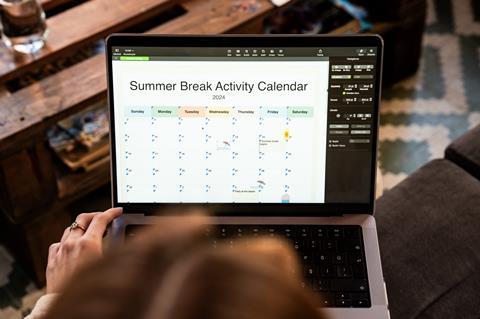
Put together a plan for each day, using symbols or photos to represent each aspect of that day for your child or young person. If possible, have a photo of them on some Velcro that they can move along the timetable as you go through the day. It will help them to know what is happening now, next, after, etc. There is an example of a visual timetable template on the Reachout ASC website, called ‘Our Day At Home’.
Read more:
6 ways Christian parents can help children with additional needs thrive this summer
Summer Is the perfect time for encouraging Bible reading in your family
5. Take favourite things
What favourite toys or items do your child or young person use to help them to feel safe and secure? Make sure these aren’t forgotten, but pack them in your hand-baggage, you don’t want them getting lost! It may be that you could introduce a new item to take on holiday, something related to the place you are going. The item could be your ‘holiday mascot’ and your child could have the job of looking after it.
6. Having a ‘dry run’ and checking out special assistance
If you are going to fly, and if the airport you are going to isn’t too far away, you could take a journey just to see it, to have a look at where everything is. Most airports have special assistance for families travelling with a child or young person with additional needs, so it would be worth exploring what can be provided. Many airlines are supportive too, but it helps to ask for assistance well in advance.
7. Have things to do
Whether you are flying, going by train, or travelling by car, there will be long periods with nothing to do. Take a pack of activities that can be brought out to fill these gaps. Depending on your child, this could be some colouring, a book to look at, some fidget toys to use, some Lego, or something on their tablet to watch or listen to, whatever helps them fill the time and not get bored.
8. Remember snacks, drinks, medication, essential equipment…
We usually remember important things like tickets, passports, money, phones etc. but make a list of what else you will need. Do you need to take medication with you? Have you got enough, or do you need to request a repeat prescription well in advance? Have you got some snacks and drinks for the journey; don’t rely on being able to stop somewhere on the way, you might be stuck in a huge traffic jam just at the time someone communicates that they are thirsty or hungry.
9. Work with your child or young person, ask them
Don’t do all of these things on your own; if possible, involve your child or young person. Seek their input, what are the things that they are worried about? What do they want to have with them to help them feel safe? What resources will help them feel in control of what’s going on? The more you talk about the holiday and work together through any fears, the more likely you are to have a successful trip. It’s back to that ‘processing time’ that I mentioned in Tip 1.
10. And finally… it’s OK to have a staycation instead!
If it all seems too daunting, too much to manage for you and your child or young person with additional needs, if the complexities of trying to have a holiday somewhere else are just too great, don’t put yourselves through a nightmare, have a staycation!
Some of the tips above will still work if you are staying at home but having trips out, and you can all have a wonderful time staying local and exploring what’s on offer there. And everyone gets to eat their usual food and sleep in their own beds each night!
Whatever you are hoping to do this summer, I hope these 10 tips will be a helpful reminder of some things that we can all do to make summer holidays a little less stressful and a little more fun. Have a great time!
























No comments yet