






Andrea Zanin from Kids Matter shares why Christian parents should resist the rush to fill every moment and instead let unstructured time open the door for faith and creativity

It’s that time of year when headlines like How to Combat Summer Boredom and Ten Ways to Keep Your Kids Busy During the Holidays start popping up everywhere. Like spare time is a bad thing! I don’t know about you, but I could sure do with some. There’s irony in wishing extra minutes into our own days whilst filling every last one for our kids. When I was growing up, if I dared mention the “B” word in my home I got a helpful, “there are dishes in the sink, aren’t there?” at which point I’d make a quick exit! My parents whole modus operandi was to be as unhelpful as possible.
So, what did we do back when we were bored and the internet wasn’t a thing? Well, options were normally: mooch around the garden, knock on the neighbour’s door, stare at all the toys we didn’t want to play with, find a sibling to annoy, lie on the grass, count ants, people watch out the window. Wherever you might have landed, universally priceless was the unoccupied space in your mind as you traversed the nooks and crannies of finding something to do.
there is freedom in having nothing to do
Space is a beautiful thing – none more so than headspace, which gives us license to think and dream and discover. As we grow into life, and adulting becomes a reality, ’headspace’ emerges as the proverbial needle in the haystack – impossible to find. If it is, by some miracle, located, it must be protected – and not just for us but if we have kids, for them too! In a world harassed not only by choice but the pressure to fill space and time, boredom becomes a counter cultural necessity. Because there is freedom in having nothing to do. How do we create if we’re always busy and constantly stimulated? When do we process – the world, life, ourselves, others? And an even bigger question: where does God fit in?
Thankfully, our God is kind – He knows our weakness and finds ways to let us know He wants to hang out – like when the WhatsApp prayer group that you signed up to at your kids’ school (but have not once ever posted in) pings a verse and it’s literally perfect for you. Or the Helsers are spontaneously the next song on your Spotify play list, reminding you that you are a child of God. And then your friend randomly tells you the fifth story you’ve heard in a week about God’s incredible goodness. And so on. And this is us. Adults, parents. Squishing God in, barely. When we fill our kids’ time with summer camps, sports, activities, workshops, playdates, extra homework and (dare I say) screens, are we taking away opportunities for them to hear from God?
Spiritual growth often happens in the quiet and the waiting
If their minds are always occupied, and full of stuff, will they ever be able to imagine their creator and follow the promptings of the Spirit stirring their soul? Spiritual growth often happens in the quiet and the waiting. Imagine David’s life as a shepherd – the epitome of boring, right? Monotony, repetition, isolation, obscurity, simplicity. But later, David killed Goliath, became king and wrote some of the most meaningful, heart wrenching biblical prose. And in both the Old and New Testaments is called a man after God’s own heart. David was not perfect by any means, but the true north of his heart was fundamentally the Lord.
What did David do in the fields all day? In the silence. He noticed – the green pastures, quiet and mighty waters, the moon and the stars, flashes of lightning, cedars and oaks, animals of the wild, birds in the sky. He daydreamed and imagined, he worshipped – and found God – and when a lion or bear came, he went after it (1 Samuel); he became a man of faith, courage, humility and responsibility. And then a hero, ruler and poet.
Read more:
5 ways to let go of summer holiday guilt and enjoy family faith moments as they come
10 top tips for a successful summer holiday for children with additional needs
Podcasts that will help Christian families on long drives this summer
6 things that help young people get the best out of Christian summer festivals
Did David feel restless, uninterested, unmotivated – bored? I’m pretty sure he did. But out there in the fields, under the great blue sky and eons of beyond, he had (perhaps the luxury) of minimal distraction. There were no books, movies, friends, games or even dishes. David had to push through any apathy or agitation, and in so doing built some kind of resilience. One can imagine him going about his daily tasks, passing the time carving wood, picking at the grass, staring at the clouds, talking to the sheep (rescuing a couple here and there) – and in so doing, becoming completely at ease in his own company; his heart open to his Maker. It’s in the nothing that David is moulded into something, according to God’s will and purpose.
It seems to me that not only is boredom essential but even biblical? Except, I live in London – with my husband and our five kids, on the High Street in a flat next to a Wetherspoons – and David’s reality is almost so completely unfathomable that I want to give up before I even start.
maybe they will get up to nonsense… but that nonsense could grow a relationship, inspire an idea, teach a lesson
Although there are many days that I want to “cut yard” (as my 16-year-old says) to somewhere else: like back home to South Africa, preferably the Karoo, where there are seven people and no internet because the government won’t accept Starlink. Then maybe we could live like David. This, however, is not going to happen so then it’s about how we not only enable but defend boredom for our kids. I don’t have an easy answer other than it requires intentionality and eradication of the fear that if they have nothing to do, they will get up to nonsense – “idle hands” and all that. And, you know what, maybe they will get up to nonsense… but that nonsense could grow a relationship, inspire an idea, teach a lesson.
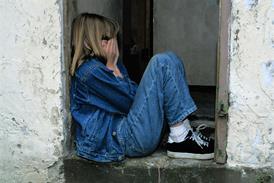
As parents, my husband and I have stolen from our own upbringing: the “B” word is a no-go and if I hear an inkling of it, I am ready with a speech about all the Western privileges they enjoy that many in my homeland are not afforded. And like us, my children have perfected the quick exit (with the fun addition of an ultra-sarcastic yawn). But, living in London in a small flat, their exit is a little more temporary than mine was in the olden days. So, they lodge a protest in lieu, enacting “the word that shall not be spoken” with great zeal: lying around, sighing dramatically, taking up space with their lethargy. Man, it’s annoying. I’ll tell them to go and find something to do – read a book, wash the dishes. Often their best games emerge from that boredom. Rinse and repeat. But there is something I want to change.
when one of them enacts “I’m bored” or risks another ’entitlement’ lecture with the actual words, the answer is, ‘Good. Enjoy it’
More recently, we’ve considered allowing the use of the “B” word and reframing it as a positive. Now, when one of them enacts “I’m bored” or risks another ’entitlement’ lecture with the actual words, the answer is, ‘Good. Enjoy it.’
And I pray that in the moments when they are mooching – sponging off space – that their hearts and minds will see God and hear His voice, in the stillness when there is nothing to do but dream.





















No comments yet