










With government, schools, and the internet shaping young minds, Jemma Wraight believes that Sacred Sexuality for Teens offers a sensitive, robust, and biblical approach for families and churches to navigate big questions together
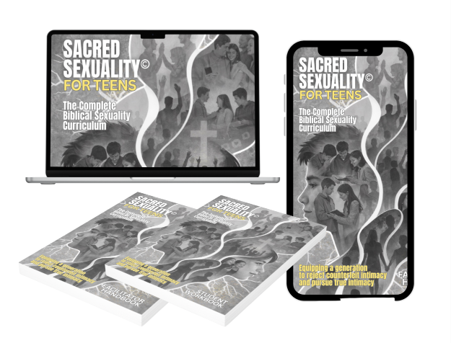
In a world where teenagers are being exposed to pornography, sexual content, identity confusion and wide range of moral standards shaped by culture, it is exciting to see a new curriculum like Sacred Sexuality for Teens being launched to equip parents, and anyone with the privilege of walking alongside teenagers in a complex world that supports distorted views on identity, sexuality and relationships.
Sacred Sexuality for Teens prepares parents and educators to no longer stay silent and allow culture to shape young people’s worldview
This is a well-timed countercultural biblical discipleship resource that encourages teenagers, parents and Christian leaders to discern God’s voice on what it means to be human. Sacred Sexuality for Teens prepares parents and educators to no longer stay silent and allow culture to shape young people’s worldview. Rather, to set biblical foundations for sexuality and human flourishing. Furthermore, it aims to speak into culture by not accepting a popular counterfeit intimacy, but to reclaim a radical purity with confidence rooted in God’s heart for people. There are many positive components to this curriculum, however, here is a short overview of some of the highlights.
Long-term discipleship and transformation
This curriculum is adaptable and designed to be used in different contexts, such as homes, youth ministries, Christian schools, colleges, universities and discipleship groups. It comes with a facilitator and student handbook which is well presented and easy to teach and follow. The content is biblically reliable but gives facilitators the freedom to adapt delivery to suit their context.
This is a significant discipleship tool for our age
One of its many strengths is empowering Christian parents to help their children understand God’s design for identity, sexuality, relationships and intimacy. Encouraging these conversations to happen firstly in the home. This not only liberates teenagers from sexual confusion, but potentially liberates the facilitator, as many adults, parents or leaders may carry sexual brokenness with lack of healthy biblical conversations in their formative years. This creates openness where adults and teenagers experience the compassion, forgiveness and love of Jesus together.
This curriculum is extensive; it is not a short syllabus or Bible study programme for a youth group. It is a commitment covering more than ‘behaviour modification’. It should be viewed as long-term faith formation, walking teenagers through confusing years with focus on their identity in Christ and full-life transformation. The course spans 12 modules and is not only a foundation for Christian sexual ethics but demonstrates how God’s lordship over our sexuality impacts every area of life, including, friendships, marriages, churches and communities. This is a significant discipleship tool for our age and I’m sure many would have valued such an approach to catechesis in their teenage years. Hopefully it contributes to future generations standing for truth with an understanding of intimacy and acceptance through their relationship and identity in Christ.
Sacred Sexuality for Teens should be welcomed as a powerful holistic curriculum, equipping teenagers (and us all) to bring our sexuality and every area of life under the lordship of Christ
Approaches complex subjects with humility
Sacred Sexuality for Teens does not shy away from topics which are at the heart of orthodox Christian philosophy, even when they are at odds with culture and popular opinion. Instead, it challenges sexual sin and societal trends. It helps teenagers understand the progression of cultural shifts and how people have moved significantly away from God’s desire for humanity. Therefore, it openly teaches on subjects such as pornography, sexual sin, abuse, shame, abortion, identity confusion and emotional wounds. However, this is managed sensitively with robust safeguarding recommendations.
Many of these topics are openly discussed through media, online platforms, secular education and from peer experience. The curriculum stresses the importance of creating ‘safe spaces’ for teenagers to explore from a conservative perspective. It could be said that many teenagers, and adults, are not fully equipped as they are also confused by varying views not only from outside the church, but inside. Therefore, this curriculum breaks down each topic and weighs it up against scripture. This process is not rushed and is rich in theological insight, which hopefully gives teenagers confidence to defend their theological convictions.
Read more:
Before you talk to your children about gender and sexuality, build a Christian worldview
Help your children navigate a sexually confusing world with gospel confidence
The sessions give ample case studies and examples for teenagers to reflect, identify with and gain understanding of why people might feel and think in certain ways. It humbly shows teenagers that it’s ok to hold theological convictions, even when it’s not popular. However, to show compassion built on the foundation of every person being made in the image of God. This will certainly help future generations address difference in a non-judgmental way and openly share their Christian faith.
Helps teenagers set positive boundaries and habits
Another strong part of the curriculum is acknowledging the complex digital world teenagers live in. It recognises the pressures young people face today with body image, online communication, influencers and the plethora of societal pressures. It explores why many teenagers feel insecure and confused but also helps them develop healthy approaches to the online world. It gives them agency to make good choices, with the firm belief that their worth is in God alone.
It doesn’t suggest the digital space is ‘evil’ in itself but helps teenagers realise its complexity and spiritual significance and provides practical guidance so they can protect themselves online. This curriculum is being released at a significant moment when not only are Christian leaders recognising the impact social media is having on our children, but government is set to introduce a social media ban for under 16s.
This curriculum does not shy away from the seriousness of sin and the world’s brokenness
Helps teenagers honour themselves and others
It not only teaches teenagers to honour God and themselves online, but the overall theme of this curriculum is how a distorted view of sex and ‘self’ not only impacts individuals but contributes to family and societal breakdown, in a culture where radical individualism is the norm. It explains how teenagers can honour each other by stewarding their sexuality. Although the concept of ‘teenagers’ and ‘dating’ are social constructs and not explicitly mentioned in the Bible, this curriculum gives plenty of theological discernment of how to do this respectably, valuing themselves and others. It provides much needed guidelines for dating and relationships based on biblical principles.
This curriculum does not shy away from the seriousness of sin and the world’s brokenness. Nevertheless, it encourages viewing our sexuality as a gift from God, knowing that God’s design is beautiful, enabling us to thrive and flourish under God’s rule. Sacred Sexuality for Teens should be welcomed as a powerful holistic curriculum, equipping teenagers (and us all) to bring our sexuality and every area of life under the lordship of Christ. This resource is aimed at teenagers as young as thirteen. Therefore, it will build solid biblical foundations from an early age, which will no doubt have a positive impact on future generations.
This is a comprehensive curriculum from a traditional orthodox theological position. Further developments could be to discuss diverse Christian perspectives on sexuality to foster Christian unity, not necessarily agreement. However, this is a brilliant timely resource for its intended audience.



















No comments yet