







Andrea Zanin valued Stephen Day’s book which inspires families to teach saving, generosity, and practical life skills,turning everyday moments into valuable money wisdom for kids
We live in a digital world where merely presenting a piece of plastic or a phone gives us food, clothing, tickets, coffee and toys – how awesome! Handing over a £5 note that your dad paid you for washing the car on a Saturday morning, and receiving £3.46 change and a chocolate, is basically archaic. Now it’s all about GoHenry and Revolut – “cyber money” that seems almost antithetical to the very literal way small children perceive the world – there’s the parenting challenge.
How can we motivate our kids to save in a world of right here, right now, next-day delivery, fast fashion and Haribo around every corner? Not to mention being generous with money and even more adult stuff, like budgets, taxes and investing.
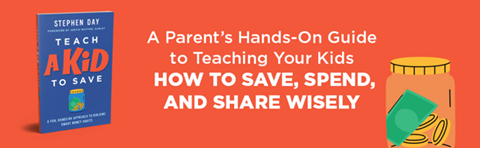
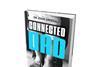
Teach a Kid to Save proposes a research-based, family-centric solution to help kids understand how money works in the world
We need to teach our kids about money. Every parent knows it, but it’s difficult for all the reasons, including our own sometimes complicated relationship with money. But fear not, dear mum, dad and carer. Stephen Day’s new book Teach a Kid to Save proposes a research-based, family-centric solution to help kids understand how money works in the world. And not just how it works, but how to be smart about it – and saving is key.
Day, an author, active professor, researcher, and a dad, proposes a mini economy in your own home as a fun, practical introduction to finances for your kids. This mini economy can be as simple or complex as you like but essentially, kids have regular jobs (and may also create businesses), earn money which they are required to give, save and may also spend in a household store. Their earnings are even taxed! The money, or currency, of the household is made up (you could even borrow money from the Monopoly game on your shelf) but it does have value – as prescribed by you and your kids.
What most parents know but can’t always turn into a practical learning experience is that the way to get kids to care about saving their money is to create some jeopardy – and this happens when they have some skin in the game. This is what the mini economy creates: an environment where children work for their money, are able to come up with creative ways to earn extra, and then after taxes and sharing, can save and spend – how much they save depends on what they want to spend it on. There are two values here: saving as good practice (for the future) and saving for a particular thing (a toy or experience), which is the more likely option in your mini economy. In essence, saving is just a plan to spend later – and an attempt to mitigate against the temptation of immediate gratification.
Jesus’s famous “Give to Caesar what is Caesar’s, and to God what is God’s” becomes a reality in small minds when they start to understand their moral, biblical obligations as citizens in the world
Split into three parts, Teach a Kid to Save first explores why we need to teach our kids about money, then how we create a mini economy and lastly, how to avoid missteps and what to do next. Each chapter ends with ‘think and teach’ questions for parents and children, and there is also a Quick Start Guide to setting up your mini economy (if you’re in a hurry) as well as a more elaborate version. The book does a great job of making this mini economy not sound like too much hard work, and whilst it does come with an investment of time, creative thinking, and organising, it is not meant to take over your household but rather ‘gamify’ a portion of it as a teaching tool so kids gain a sense of broader economic life and their place in it.
Chapters are interspersed with research (where relevant) as well as relatable real-life examples – as if someone has literally pressed replay on life and conversations in your own home. As it turns out, there are many of us who lie in bed at night thinking about whether kids should be paid to do chores and what constitutes ‘a chore’ – there’s a whole chapter discussing this. Day also takes a closer look at what it means to share our money, but when all is said and done, all good money habits follow one basic principle: spend less than you earn, and the rest follows – saving included.
highly accessible, funny and really practical
Perhaps most striking about Day’s take on saving and teaching is how it’s all underpinned by your own family’s money values, which will make each mini economy slightly different.
These are values that, for most of us, are implicit rather than explicit but to illustrate the point, the book names stewardship, generosity, self-control, justice, and work & rest as five values parents commonly want to teach their children about money. These may, of course, differ per family but let’s take generosity as an example; Day describes how you can use a mini economy to help your kids grow up to be generous adults, and it’s here that the biblical concept of tithing can be planned into your kids’ stewardship of money. Taxes, too. Jesus’s famous “Give to Caesar what is Caesar’s, and to God what is God’s” becomes a reality in small minds when they start to understand their moral, biblical obligations as citizens in the world.
The way the mini economy works is that play-money earned for working is taxed (by the government of mum and dad, or ‘the home’ in concept), and budgets are created according to the popular Share-Save-Spend model, which, in a secular context, may mean that saving comes before sharing, but in Day’s version, sharing (tithing, donating or giving) comes first.
Read more:
How Christian parents can respond to family poverty
Day’s biblical perspectives on stewardship are interwoven into examples of how his own family’s mini economy works but never in a way that excludes anyone (of all faiths or none) from using the model in their own homes. As well as being highly accessible, funny and really practical, the book offers resources that would be helpful in setting up your mini economy, like templates for pretend money, budget trackers, and lists of household jobs and ideas for business enterprises. There’s a clear sense throughout that not only is teaching kids about money necessary, totally achievable and even fun, but doing it the mini economy way is not just about money, it’s about life (society, the world!) and how to set our kids up well to be independent, contributing members of it.
Chances are that this is the book you’ll be talking about on the school run – with your kids and other parents.
















No comments yet