





The latest Minions film features spellbooks and summoning scenes, David Griffiths thinks there is a growing presence of occult imagery in children’s entertainment which raises issues for Christian families
Read an alternative view here.
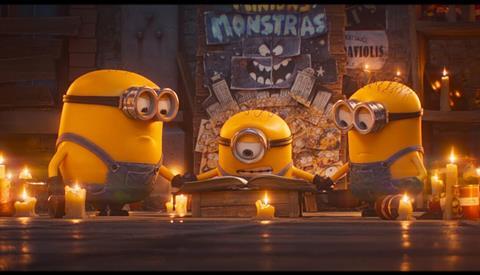
For over a decade, Illumination’s immensely popular Despicable Me and Minions franchise have been a reliable source of comedic relief for kids and adults alike. The newest release, Minions & Monsters, delivers the same feel-good formula of amazing animation and slapstick action sequences. Its charming homage to the golden age of Hollywood provides the context for the introduction of the title’s monsters, when James the Minion decides he wants to make a monster movie which leads to his friend Ed using a stolen spell book to summon an entity called Goomi the Deceiver. It’s this course of events, followed by two other demonic monsters they unleash, that has drawn criticism from concerned parents on various social media sites.
While some have defended the film’s depiction of ritual magic as an absurd device used to progress a funny storyline, the decision to build a story around such a thing represents a growing trend of occult themes showing up in children’s entertainment that Christian parents should be aware of. Other recent examples of this include Pixar’s Elemental, which featured themes of ancient mysticism, and Onward, which introduced a family audience to the concepts of necromancy and conjuring. Similarly, Disney’s The Owl House incorporated demonic imagery into a coming-of-age journey, while Wish centred on a battle over forbidden magical spell-books, and the recent Hocus Pocus sequel sought to reframe child-sacrificing witches as merely “tragically villainous.”
dark spiritual practices are being normalised to an increasingly younger crowd
This trajectory is set to continue in 2026, with Disney’s upcoming film Hexed, being focused exclusively on a secret realm populated by witches. From these examples, it’s clear that these releases go beyond the fairy tale depiction of magic portrayed in stories such as Cinderella or Beauty and the Beast and have shifted witches from being the frightful villains found in Hansel and Gretel and Snow White, to being the characters the audience is encouraged to root for.
With Minions & Monsters being far from alone in its usage of occult themes, the accusations that concerned parents have been trying to instigate another “satanic panic” do not appear justified. Part of that historic panic was based on fears about things that were not necessarily happening, while in this case, the blatant presentation of occult themes to children is very real.
the wider idea behind occult philosophies is that they’re all exclusively “me-centred”
While some say that the Minions’ latest capers do not portray the use of magic as a positive thing (Minions are not especially drawn to being good after all), the real issue comes from it being another in a long line of examples where dark spiritual practices are being normalised to an increasingly younger crowd. Presenting spellcasting, witchcraft, and summoning spirits as fun, humorous, or empowering activities not only trivialises something that the Bible strictly forbids, but also threatens to desensitise children to them and convince the wider public that occult practices are completely normal and harmless. Because of the massive, multigenerational appeal of the Minions and Despicable Me franchise, this new offering may sadly play a role in deepening this deception.
Aside from being direct contraventions of the biblical commandments not to practice divination, sorcery, or witchcraft, the wider idea behind occult philosophies is that they’re all exclusively “me-centred.” While James just acted like a typical Minion by following his mischievous instincts in the film, using forbidden spiritual means to feed self-centred motives in the real world is to rebel against God’s word and trust in an alternative spiritual power instead of Him.
Read more:
What Toy Story 5 can teach us about discipleship, technology and the power of play
This trend is even more pervasive in horror movies and programmes aimed at teen and adult audiences such as The Chilling Adventures of Sabrina, Lucifer, and Hereditary. Like many modern productions, they forge tales where the Devil and demons are taken out of their biblical context, where they are revealed to be inferior, defeated powers, and portrays them either in sympathetic or glamorous ways, or as threats which some device, counter-spell, or hero is needed to bring about their defeat.
Part of the reason this cycle of growing tolerance towards occultism in entertainment continues, is because it is no longer resisted the way it once was. The popularity of witchcraft and divination on platforms like TikTok reveals that what used to be seen as shady, fringe beliefs have moved from the shadows and into the full light of day. Social media trends have played a major role in this growing tolerance, but in reality, the trend has been rising for several decades. When Christians do speak up and protest against these influences, they can find themselves in a place where they are shouted down for being intolerant or trying to cause unnecessary alarm.
While the increase in occult themed entertainment is certainly a cause for concern, loud overreactions to its potential threat may have little real effect in combatting it. We should remember not to give the Devil too much credit because he is already a defeated foe, and that all we are advised to do in Scripture is resist his influence.
The popularity of occult themes in modern entertainment makes it almost unavoidable that children are going to come across them at some point
Calls for mass boycotts can be a valid form of resistance in some cases, as we should always openly oppose the works of darkness, but they are not the only solution. Resisting the agenda doesn’t have to mean prohibiting every possible threat, which may prove both impossible and exhausting. Instead, it can mean actively deconstructing the agendas our youth are being exposed to. If parents allow their children to watch a film which turned out to have strong occult overtones, they should be prepared to use it as a teaching moment and highlight the problems it presented
Whether you take your children to see Minions & Monsters or not is therefore a matter of discernment. But that discernment should be informed by the fact that its occult elements, while somewhat tongue-in-cheek, still form part of a wider pattern that desensitises young audiences to occult themes and other forms of “me-centred” ideology.
The popularity of occult themes in modern entertainment makes it almost unavoidable that children are going to come across them at some point. While it may be preferable to delay that exposure for as long as possible, being able to apply responsible discernment to entertainment schedules to either prevent access to such things or at least explain their spiritual errors will prove to be an increasingly vital skill. Ultimately, this should take the form of reminding them that it is not in ourselves, any other person, and certainly not magic and spell-books that we can put our trust in, but God alone, who truly knows and cares about our best interests and offers us life in all its fullness.
Read an alternative view here.
















No comments yet