








Paul Mallard’s new book breaks the silence around children who walk away from Jesus, equipping parents and churches with grace, truth, and the courage to keep praying
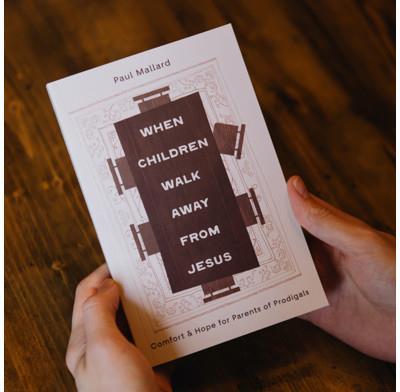
When Children Walk Away from Jesus: Comfort and Hope for Parents of Prodigals is published by The Good Book Company and is available now. Paul Mallard served as a pastor for 40 years in three different churches. He now works as Director for the West Midlands for the FIEC (Fellowship of Independent Evangelical Churches, UK), supporting churches and their leaders across the region. He’s the author of several books, including Invest Your Disappointments and Heaven: Living with Eternity in View. He and his wife Edrie have four children and eight grandchildren.
Paul, what is the book and what are you trying to do with it?
In every congregation, there are parents whose children, though brought up in a Christian home and sometimes making a profession of faith, are no longer following Jesus. Some have rejected both faith and family, while others are closer but don’t share their parents’ faith. It’s common but rarely talked about—almost the elephant in the room. Parents feel bad, guilty, even ashamed, so they avoid the subject.
Drawing on my experience as a pastor, this book ministers to that situation - helping people understand it’s serious, because eternity is at stake, but also to find grace and strength in God for whatever happens. I hope it’s an upbeat book, even though it addresses what for many is their biggest heartache.
We mustn’t assume it will all be OK if our child isn’t following Jesus, but we can rely on God’s sustaining grace
The chapters are all questions—why did you choose that structure?
Most of my books come out of pastoral experience and what I have gleaned from seminars I’ve given. That’s meant that over the years I have heard lots of questions from people. A question format makes it more of a dialogue and addresses the real issues people face. I wanted to scratch where it itches, dealing with the main questions parents ask.
You balance scripture and practical outworking well. How do you go about that?
You have to begin with the Bible, because that’s our foundation. There are principles for parenting and for different situations, both by precept and by example. But people also need to know, “So what?” Paul’s letters do this—after theology comes the practical: church, life in a hostile world, marriage, parenting, spiritual battle. I’ve tried to learn that balance through 50 years of preaching and 40 years of pastoring. People need real-life answers, not just principles.
Parenting is one of the most important things we do, so when a child walks away, there’s grief and deep hurt
You use a lot of stories—some real, some imagined. Why?
Stories ground things in real life and show what situations really look like. With real-life stories, I’m always careful—they’re anonymous, and I always ask permission. People are generous in sharing if it helps others. Stories connect with people and show reality. The Bible itself is full of stories; Jesus taught with parables. Stories are honest and help people relate.
You balance grace and truth. How do you get that right?
It’s about biblical balance. Many books on this topic focus on the “prodigal” son—the one who goes off the rails—but forget the second son, who’s just as far from his father. The biggest issue is not behaviour, but whether someone knows Christ. Sometimes parents think, “Well, my son lives a good life, so he’ll be OK,” or, “He made a profession of faith—he’s safe.” I’m not the judge, but we have to be honest that this is the real issue.
At the same time, we come to God for grace. Every parent makes mistakes, but we can draw on God’s grace. There’s a story in the Bible where Hezekiah lays his desperate situation before God—he can’t solve it himself, so he gives it to God. That’s what we must do with our children—bring them to God and trust him. God loves our kids more than we do. We gave our children to Christ before they were born, and we keep doing it every day. Grace sustains us, and we must deal with our kids in grace: love is patient, love is kind. We mustn’t assume it will all be OK if our child isn’t following Jesus, but we can rely on God’s sustaining grace.
even if you can’t see it. You don’t know what God is doing in your child’s heart. Never give up
What do you think are the main things parents get wrong when their children walk away from Jesus?
Sometimes parents become very judgmental and aggressive, which doesn’t win kids back. Or they make it about themselves—“Why are you treating me like this?”—instead of focusing on the child. The other extreme is pretending, “You’re still a Christian, really,” even if they’ve rejected the gospel. Or even changing your theology to accommodate their choices.
What about churches—do they make similar mistakes?
Yes. Usually churches ignore the issue; it’s rarely talked about openly. In one church, we had a “Parents in Pain” prayer meeting—mainly under the radar, but a real opportunity for parents to pray and share. Churches need to be aware of the issue, even if it’s not something you announce in a public meeting. Ministers should ask themselves if they are ministering grace into these situations. In home groups, can people be honest about their struggles with their children? Sometimes we become judgmental—if my son is on fire for God and someone else’s isn’t, we assume they got it wrong. We can become little Pharisees if we’re not careful.
Read more:
Rethinking Christian parenting: The book challenging discipline myths in the Church
Teaching our children to cry - Lessons from The Neverending Story
What do you think is the hardest thing parents face when a child walks away?
Guilt and a sense of failure. Parenting is one of the most important things we do, so when a child walks away, there’s grief and deep hurt. There’s also a sense of waste—what might my child have become? And then, when children are in real trouble—prison, addiction, broken relationships—it is heartbreaking. The biggest issue is salvation, but there are lots of presenting issues that cause pain.
If you could say one thing to a parent in the middle of this heartbreak, what would it be?
Don’t give up. Keep praying and bringing your child to God. God can change any heart. There’s a parable about a farmer sowing seed and then waiting—something is happening under the surface, even if you can’t see it. You don’t know what God is doing in your child’s heart. Never give up.
Anything else you want to say about the book?
The book includes practical suggestions on how to pray in these situations, that’s vital. One church told me they used those prayers in their own prayer meeting. I hope it’s useful for parents and churches alike.
When Children Walk Away from Jesus: Comfort and Hope for Parents of Prodigals is published by The Good Book Company and is available now.