






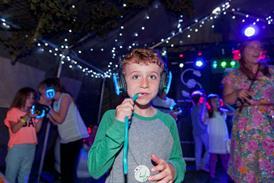


When parents make singing a natural part of life, children discover that worship is for everyone—not just great singers—and that songs can shape faith for years to come
Through Scripture, God’s people are repeatedly called to lift their voices in praise, lament, thanksgiving, and confession. And yet, for children and young people, sung worship can present real challenges. How do we address this tension
The biblical mandate to sing
Some of us might not be great singers but sung worship is not an optional extra to the Christian life: it is one of the ways that faith is expressed, formed and sustained.
Responding to God in song is a theme throughout the whole of Scripture. After crossing the Red Sea, Moses and the Israelites sing in response to God’s deliverance, ‘The Lord is my strength and my song; He has become my salvation’ (Exodus 15.2). Further on, the Psalms model a faith that is inseparable from song, giving us the original hymnbook. In the New Testament the instruction to gathered Christians is to ‘speak to one another with psalms, hymns, and spiritual songs. Sing and always make music in your heart to the Lord,’ (Ephesians 5.19).
If we want children and young people to engage in sung worship as part of their discipleship, we need to be intentional
Singing is both vertical, directed towards God, and horizontal, teaching and encouraging one another. To sing together is to proclaim truth and participate in the worship of the whole people of God.
Issues with singing for youth and children
For younger children, the language of hymns and songs can be complex and abstract, if they are even old enough to read the words. For teenagers, the vulnerability of singing out loud, particularly amid changing voices and heightened self-consciousness, can lead to discomfort or disengagement. Musical preferences vary widely and not every song will be one that we would choose ourselves to have in our service. Because of these factors, as we encourage children to grow in faith, we need to teach not only how we engage in sung worship, but also why sung worship matters, and how to participate faithfully even when the song is unfamiliar or not a personal favourite.
If we want children and young people to engage in sung worship as part of their discipleship, we need to be intentional – here’s some ideas to help us help our youth and children.
When worship music has a place in everyday life, singing becomes a normal and integrated expression of faith rather than a strange activity reserved for Sundays
Modelling matters more than we think
One of the most powerful influences on a child’s engagement in sung worship will be what they observe in the adults around them. When adults sing with attentiveness, reverence, and visible engagement, even if the song is unfamiliar or not to their taste, children learn that worship is not primarily about preference but about faithfulness.
The opposite is true also. When the adults around them are disengaged, chatting, or have visibly opted out of singing, children notice. What is modelled then shapes expectation. We remember that we are ‘Christ’s ambassadors’ (2 Corinthians 5.20), and that applies here too. Sung worship is not just taught; it is caught.
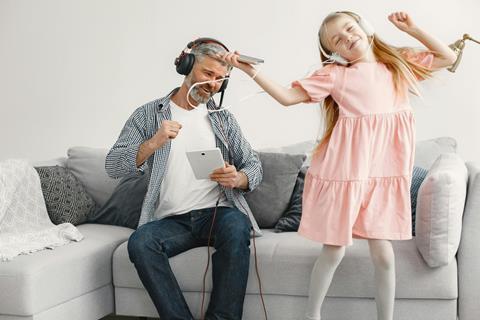
This modelling to children in church extends beyond our Sunday gatherings. When worship music has a place in everyday life, singing becomes a normal and integrated expression of faith rather than a strange activity reserved for Sundays.
When children bring their emotions before God through song, sung worship becomes relational rather than performative. It becomes a space where faith meets real life
Making space for sung worship beyond Sunday
Allowing sung worship into the rhythms of home life helps children to see singing as part of their whole-life discipleship. Just as prayer is not confined to church gatherings, singing need not be either. Listening to worship music during ordinary moments: in the car, while tidying, or in family devotionals at the start or end of the day, reinforces the idea that singing to God is part of Christian life.
This also helps to build formative familiarity. Choosing songs that are often sung in your church helps them to facilitate participation on Sundays. For all ages, this means that confidence grows, participation increases and the barrier of unfamiliarity is lowered.
Music is a powerful teacher: songs stick in our memory far more easily than things that are simply said
Singing forms theology
Music is a powerful teacher: songs stick in our memory far more easily than things that are simply said. Many adults can recall hymns learned in childhood long after words from sermons have faded. This matters because our theology is shaped not only by what we are taught explicitly, but by what we sing repeatedly.
As churches sing together, children absorb rich theological truths; songs catechise across generations. As the Psalmist writes, ‘I have hidden your word in my heart,’ (Psalm 119.11). Sung worship is one of the ways the Word is hidden deep within us.
Helping children understand that singing is a way of learning who God is can transform how they approach it.
Read more:
Christian parents can usefully use KPop Demon Hunters to explore themes of idolatry and the Kingdom of God with their family
Why do Christians sing so much?
You’re not singing anymore… How 5 ways to keep Christian boys involved in musical worship.
Creating practical pathways for engagement
Practical steps can also facilitate engagement. For older children with an interest in music, an invitation to serve in music groups in age-appropriate ways offers not only participation, but side-by-side mentorship. Standing alongside experienced musicians and leaders can be a powerful form of discipleship, rooted in shared practice rather than formal instruction. Others may connect better through technical roles. Helping with visual media or sound helps keep young people engaged with the words being sung and allows them to contribute meaningfully to the worship of the gathered church.
For younger children, simple adjustments can help. Being able to see what is happening matters: things like being positioned so they can see the musicians and congregation. Encouraging participation in any form, even humming or singing “la la la” when words are unknown, affirms that worship is about the heart as much as precision. Jesus’ affirmation that praise comes ‘from the lips of children and infants,’ (Matthew 21.16) reminds us that imperfect participation is still genuine worship.
When children are equipped to sing, even when it feels awkward or unfamiliar, they are being formed in habits of faithfulness that will serve them throughout their lives
Simple, interactive practices can also deepen engagement. Choosing a repeated word in a song and responding with an action, such as a clap, fist bump, or high-five, teaches children to listen carefully and opens the door to a conversation about the meaning of that word. And, in doing so, children learn that worship involves both mind and body.
Engaging emotion and prayer
Music carries emotion in ways that words alone cannot. It gives language to joy, lament, hope and longing. Helping children recognise how a song makes them feel, and connecting that emotion to prayer, invites them into a deeper form of worship. Encourage children to think about how the music sounds: angry, sad, or happy. When children bring their emotions before God through song, sung worship becomes relational rather than performative. It becomes a space where faith meets real life.
Singing as discipleship
Ultimately, helping children and young people engage in sung worship is not about producing confident singers. It is about forming disciples. Singing teaches theology, shapes imagination, and binds individuals together. When children are equipped to sing, even when it feels awkward or unfamiliar, they are being formed in habits of faithfulness that will serve them throughout their lives.