









As screens compete with toys and imagination, Chip Kendall believes that the latest Pixar film asks a crucial question to Christian parents: will we just police screen time, or model richer, more connected lives ourselves, even when it means putting our own phones down?
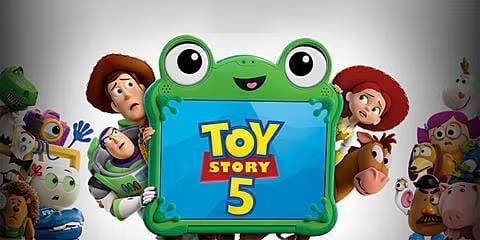
With Toy Story 5 having arrived in cinemas this summer, Pixar may have accidentally given us one of the most important parenting conversations of the year.
In the new film, Bonnie becomes increasingly captivated by a tablet device called Lilypad. Suddenly Woody, Buzz, Jessie and the gang find themselves competing for her attention in ways they’ve never experienced before. The question at the heart of the story isn’t whether technology is bad. It’s whether imagination, relationships and real-world experiences can still flourish in a world dominated by screens.
If I’m honest, that’s a question I’ve been asking myself a lot lately. Not just as a children’s author. Not just as a parent. But as someone who is increasingly aware of my own complicated relationship with technology.
Recently, I caught myself doing something many parents will recognise. I was encouraging my children to spend less time on screens while simultaneously checking emails, scrolling social media and watching videos on my own phone.
while we’re rightly thinking about protecting young people from unhealthy digital habits, many of us adults are still carrying our phones around like emotional support animals
It’s amazing how quickly our children can spot the gap between what we say and what we do.
There’s been a growing national conversation about how best to protect children online, with increasing support for stronger age restrictions and greater safeguards around social media for under-16s. Whatever shape those policies ultimately take, they reflect something many parents already know instinctively: our children’s attention is precious.
But another part of me realises that while we’re rightly thinking about protecting young people from unhealthy digital habits, many of us adults are still carrying our phones around like emotional support animals.
We’re worried about our kids being hooked, but the uncomfortable truth is that many of us are hooked too. In fact, there were moments while writing my new Level Up book series that I found myself wondering whether the timing of these books was as much for me as it was for them. Here’s four things that this has made me desire for us and our children.
Children need real friendships. Real conversations. Real communities
1. Confidence beyond the ‘like’ button
TikTok has become one of the most influential platforms in Gen Alpha’s world. Millions of young people spend hours each week scrolling through an endless stream of content. Yet confidence built entirely on views, likes and followers can be remarkably fragile.
Children need real friendships. Real conversations. Real communities. Whether it’s joining a choir, playing sport, serving in church or helping a neighbour, children discover something powerful when they engage with people face to face: their value comes from being known, not merely noticed.
In a culture that often rewards outrage, respect is becoming a radical act
2. Respect beyond the algorithm
Algorithms are designed to show us more of what we already agree with.
Life, on the other hand, isn’t.
Families, churches, schools and communities place us alongside people who think differently, vote differently, worship differently and see the world differently.
Learning to share physical space with others teaches patience, empathy and respect in ways that online interactions rarely can. In a culture that often rewards outrage, respect is becoming a radical act.
Read more:
What Toy Story 5 can teach us about discipleship, technology and the power of play
What Christian parents and young people really think about the social media ban
3. Curiosity beyond consumption
Children today have access to more information than any generation in history. Yet information is not the same as curiosity.
True curiosity emerges when children ask questions, explore woods, build dens, create music, experiment with ideas, make mistakes and discover things for themselves.
The greatest inventors, artists, scientists and explorers didn’t simply consume content. They pursued something else: wonder. And wonder still grows best in the real world.
4. Potential beyond entertainment
Perhaps the greatest challenge facing parents is helping children move from being consumers to contributors.
Every child carries unique gifts and God-given potential. The question is not simply what content they consume, but what contribution they will make. Will they create? Will they serve? Will they lead? Will they build community?
Maybe the most counter-cultural thing we can do today isn’t deleting TikTok.
Maybe it’s picking up a book.
Not handing one to our children. Reading one ourselves.
But perhaps the real question isn’t whether screens are winning. Perhaps it’s whether we are willing to model a richer, deeper and more connected way of living
Children become what they see.
If we want them to become readers, thinkers, learners and explorers, then they need to see us becoming readers, thinkers, learners and explorers too.
Even better, let’s read together. Not parents reading to children while secretly checking notifications every few minutes. Parents and children reading with one another. Talking about ideas over breakfast. Laughing about stories in the car. Discussing questions before bed.
The battle for our children’s attention will continue long after Toy Story 5 leaves the cinema. But perhaps the real question isn’t whether screens are winning. Perhaps it’s whether we are willing to model a richer, deeper and more connected way of living.
So here’s my challenge to parents everywhere:
Read a book this summer with your child.
Not to them.
With them.
Because if we want a generation that is curious, confident, respectful and ready to fulfil its God-given potential, then we need to model those habits ourselves.
And if you’re looking for somewhere to start, I’d love to suggest my Level Up book series. After all, those books were written for children—but judging by what I’ve learned while writing them, they might be exactly what some of us grown-ups need as well.


















No comments yet