







Bob Hartman thinks we have underplayed the Kingdom of God and Jesus’ kingship when discipling children - in his latest storybook Bible he’s looking to redress the balance
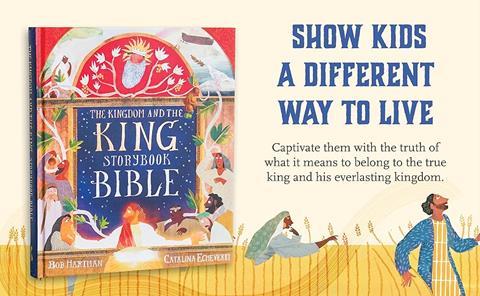
Bob, there are lots of storybook Bibles out there. Tell us about this one and how it is different.
The difference with this storybook Bible is its focus on the Kingdom of God. God is King throughout the Old Testament—the creator king, the redeemer king, the rejected king. There are promises of the coming king, and Jesus arrives announcing the Kingdom of God. I wanted to make that the heart of what Jesus came to announce, to look at who he was in his ministry and how that ties into the big Bible story, and then our response to it.
If you listen to Jesus, he introduces the parables with the Kingdom, he arrives announcing the Kingdom, but we often gloss over it
Why major on the Kingdom and the king?
I think it’s an approach to understanding Scripture and especially Jesus that’s been a bit overlooked. If you listen to Jesus, he introduces the parables with the Kingdom, he arrives announcing the Kingdom, but we often gloss over it. What does it actually mean—especially for kids? I felt no one had really tried to unpack the big story of the Bible with that intent, even though it’s right at the heart of what the Bible is about.
How did you pick the stories included here?
We tried to focus on stories that had to do with the Kingdom and kingship. Early stories naturally fit, but we also wanted to highlight contrasts—like including Manasseh, a king who really got it wrong but repented in the end. You don’t often see Manasseh in children’s Bibles. So we balanced stories of negative and positive kings.
if you’re faithful to both the facts and the intent of the story, you’ll be sound theologically
Some familiar stories I had to tell quite quickly, to keep the narrative moving. If you want more depth, there are plenty of other children’s Bibles for that. This one is about propelling the big narrative—God as King and what that means.
How do you balance theological truth with clarity and age appropriateness?
You tell the story as effectively as you can. God reveals himself largely through stories, so if you’re faithful to both the facts and the intent of the story, you’ll be sound theologically. For children, you tell it creatively, in language they understand. I think you fall flat if you over-theologise or don’t tell the story well. If a story just isn’t age-appropriate, maybe it’s not the right time for that story.
If you’ve read the story in advance, you can read it better to your children
Does this storybook then link Lily the Lemur and the Lamb King?
Yes, Lily the Lemur and the Lamb King puts the idea of the Kingdom of God into a made up story. It’s not a Bible story, but through these characters and how they relate, you can unpack theological ideas in a way that’s embedded in relatable stories for kids. That was my way of trying to do things a bit differently.
What are your tips for parents reading this Storybook?
Spend some time with it beforehand. If you’ve read the story in advance, you can read it better to your children—putting the right intonation in the right places and bringing the story to life.
Read more:
Why The Blobs by YouTuber Justin Stuart makes a great Christmas gift for kids and parents alike
Jesus Our True Friend makes an excellent Christmas gift for children and parents alike
What age group are you aiming at?
It’s aimed at 5 to 11s. It’s wordier than some other storybook Bibles, so not for the very young. But the illustrations by Catalina really help younger children engage. She tells so much of the story through the margins, adding physical details I didn’t have space for in the text. Her art helps parents explore the story together with their children.
How did the relationship with the illustrator work?
Catalina did all the illustration in connection with the editor and designer. I stay out of it, with rare exceptions, because the artist brings their own gift to interpreting the scriptures. Catalina spent a lot of time researching what people wore in biblical times, what the culture was like. But then she also looks around her own world for inspiration. For example, she based Jesus’ tunic on a wrapper she found on sushi, symbolising water and light—the water of life and the light of the world. She did that quite intentionally every time Jesus appears.
Writing this has deepened my appreciation for Jesus’ kingship and the upside-down nature of his Kingdom
Her illustrations are not beholden to anyone—they’re quite unique and really add another layer to the stories. She’s familiar with the text, spends time researching, and it shows in the art.
How has writing this changed you?
It’s made me more aware of what it means for Jesus to be King—not just generally, but King of my life. I think I needed to pay greater consideration to what that means for how I act, in my community, and in the kind of person I’m called to be. Jesus challenges us about what Kingdom life is really like—how it turns our attitudes toward wealth, power, and community upside down.
If I look back, maybe that guy who was too concerned about his job in his 30s would have been better off paying more attention to what the Kingdom is about. Writing this has deepened my appreciation for Jesus’ kingship and the upside-down nature of his Kingdom.