





Labubu dolls are now a global phenomenon - but do they make a good gift for a child? Nesu Kwaramba explores the toy that swept the board in 2025
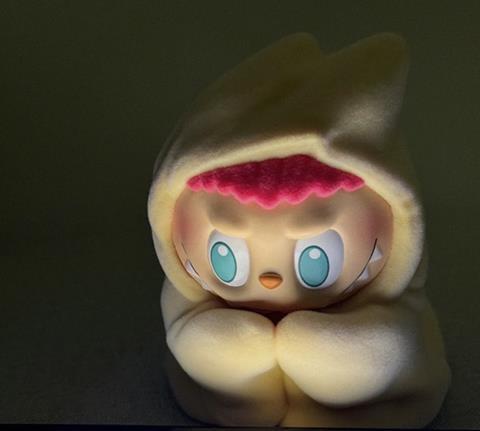
Labubu is arguably the most pervasive fad amongst emerging generations at the moment. This toy doll was ‘easily the most wanted Christmas toy’. Indeed, 2025 witnessed a manic ‘hunt’ for the doll take shape globally with young people descending upon stores in order to obtain this coveted possession. In fact, demand for this doll has been so drastic that fights have broken out amongst fans outside retailers, wherefore Pop Mart (the manufacturer) actually decided to pull the dolls from its UK stores earlier in the year to curb the chaos.
young people love Labubu. But, do Labubus make a good gift, or quite the opposite?
Undeniably, one of the most pivotal factors in fuelling the Labubu frenzy has been the endorsement of the dolls by some of Gen Z’s more popular cultural icons – like Rihanna, Kim Kardashian, Dua Lipa and David Beckham; but South Korea’s Lisa from Blackpink seems to be credited with kick-starting the cultural trend. With Labubus going viral on social media, it was only a matter of time before the doll popped up in conversations amongst young people in our youth group. So, it would appear, many young people love Labubu. But, do Labubus make a good gift, or quite the opposite?
A look behind Labubu
What exactly is a Labubu? A Labubu is a sharp-fanged, monster-like, furry-feeling , bunny-eared, toy doll whose nine teeth complete a mischievous grin. The toy was designed by Hong Kong artist Kasing Lung who featured Labubus as characters within his story book Trilogy – ‘Monsters.’ It is understood that inspiration for these characters was derived from Nordic folklore. Labubu is ‘kind-hearted and always wants to help, but often accidentally achieves the opposite’. For all the playfulness and quirkiness associated with the figurine, there is a discernible rebelliousness and ‘chaos’ linked with the doll.
it would still be good to think critically about what we are promoting through the content and material our young people are engaging with
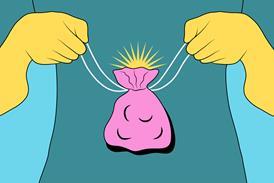
One of the most intriguing features of the purchase experience is that the Labubus are concealed in ‘blind boxes’ according to which buyers don’t actually know which Labubu they’ve purchased – until the box is opened. It is this mysterious reveal experience that has contributed to the global hype. However, I am not the only one who has found the doll somewhat unsettling.
Labubu has been the subject of much controversy, especially in religious circles. In fact, not only have some advanced that the doll is inspired by some dark ancient spirituality, but the figurine has been linked with unfavourable (spiritual) phenomenon – hence why even some influential Christian voices have intimated that the dolls are demonic. Some understandably would not want to go that far. Whatever the case, it is worth thinking critically about what young people consume – and what kind of behaviour their consumption choices inspire.
Glitter and gold
We may recall the old adage: ‘not everything that glitters is gold’. Moreover, the Bible cautions that although something may be ‘lawful’, not everything is good for us (1 Corinthians 10:23). It is this kind of discernment that parents can help young people to develop as they navigate a world that is replete with various cultural customs – some of which are lawful, but not necessarily lifegiving. Of course, it is beneficial for young people to engage with age-appropriate activities and pastimes germane to their stage of development; in fact, it is expected that young people will ‘play’ in particular ways (Matthew 11:16) or showcase certain attitudes and perspectives commensurate with youth (1 Corinthians 13:11). With that said, what kind of behaviour and attitudes are being promoted by the purchase of a monster doll whose nature is chaotic, and which is associated with some rebelliousness?
Ultimately, this strikes me as a conscience and conviction issue
As those who care about the well-being of our young people – as well as their journey towards Jesus-centred living – we need to be aware that there is a war for our children and the enemy will not spare them simply because they are young. If the enemy can negatively influence people when they are young, he can spoil a whole generation and turn them away from God (Judges 2:10-11). Our crafty adversary (Genesis 3:1; Revelation 12:9) will often make the grotesque glitter (2 Corinthians 11:14).
Recently, I was talking to a young person in my youth group in year 7. Shortly after arriving at the youth club, he began to rummage through his bag; and as he did this, I saw a book that he had in his possession. I, being an avid reader, enquired after what he was reading to satisfy my curiosity. It was then that he produced a book from Darren Shan’s ‘Demonata’ (children’s books) series – which is advertised by Amazon as suitable for those 10+. It is anything but! It is lawful, but I can assure you it is not lifegiving! Yet, the young boy’s effervescence as he told me a little bit about the plot was undeniable!
Read more:
Bob Hartman’s latest Storybook Bible makes an amazing Christmas present for Christian families this year
Why The Blobs by YouTuber Justin Stuart makes a great Christmas gift for kids and parents alike
Again, Romans 12:2 comes to mind, and is even more pertinent as the world of entertainment becomes even more accessible to this generation of young people. I think toys and games are great for young people, but I do think there needs to be some vigilance considering our enemy’s very real mandate (John 10:10; 1 Peter 5:8).
So, Christmas and beyond…
Ultimately, this strikes me as a conscience and conviction issue (Romans 14). However, I still think that, as we’ve just celebrated the arrival of The Light of the world at Christmas, it would still be good to think critically about what we are promoting through the content and material our young people are engaging with – here are some helpful thoughts to consider:
1. Do we feel unsettled by the content or material (1 Samuel 24:5; Romans 14:23; Acts 16:6-8)?
2. Is the content or material constructive – what does it promote?
3. Are there any other comparable, yet more wholesome alternatives available?