









Churches and cathedrals are not museums to be preserved in silence — they are living, sacred spaces where children have every right to wonder, wander and grow in faith. Laura Eagar provides five practical tips to help your family embrace the beauty and reverence of our most beautiful and sacred spaces.
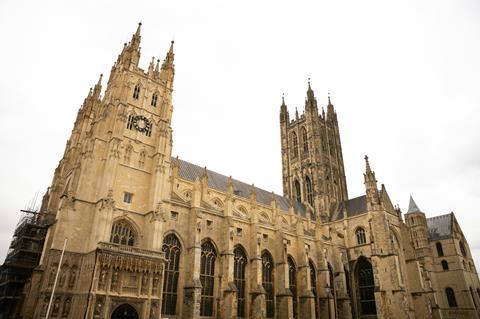
A key tenet of the Christian faith is the importance of divine beauty. Churches have been built for thousands of years to be a sacred space for worship. Psalm 29:2 says we are to “worship the Lord in the splendour of holiness.” Churches are not just pretty buildings, they’re holy spaces in which people can feel closer to their faith – and that includes kids.
Many of our greatest church buildings are now cultural attractions, with exhibitions, concerts and entry fees. How can we balance showing our children the importance of beauty and reverence in our sacred spaces? This can feel an impossible task when our greatest churches and cathedrals come with the same cultural expectations as a fancy restaurant.
Cathedral visit
As a parent of two young children, I recently witnessed first-hand this tension. On a family holiday in a small city, we visited a beautiful cathedral. Once we had paid our admission, we wandered the church trying to take in the vastness of the stained glass windows and the epic story they told. So far, so good. Yet we were then accosted by another visitor and told a church is not the place for young children as they were disturbing the audio guide.
Churches are not just pretty buildings, they’re holy spaces in which people can feel closer to their faith – and that includes kids.
Now, this gentleman was certainly just having a bad day. But he put his finger right on an issue that I’ve thought about a lot: how to bring children into our most significant church buildings and show them what they mean.
To look at a beautiful building, listen to wonderful music or gaze at stained glass helps us examine our faith in a different, more meditative way. In society’s quest to preserve and safeguard our most precious buildings, we run the risk of excluding children by pushing them out of our most significant sacred spaces.
5 tips to encourage curiosity
Of course, children should behave appropriately, but when we mistake silence for reverence, it makes it harder to bring children to faith. So what can parents do?
1. Persist and practice
Jesus said, “Let the little children come to me, and do not hinder them, for the kingdom of heaven belongs to such as these.” (Matthew 19:14).
This doesn’t just mean when children are conveniently quiet and placid. When visiting Assisi recently, our children were excited by the huge building, but quickly calmed down. Nuns smiled at our toddler, people were helpful with the pushchair and we hurried round the crypt so as not to disturb people. We had viewed one of the most beautiful buildings in the world and been welcomed as guests into a working church.
Being in awe-inspiring spaces is a skill that requires practice. Children need to experience wonder to know how to venerate and respect beautiful sacred buildings. Don’t be disheartened if they don’t linger – keep bringing children and let them take up room. It will become easier as they become more accustomed to the vastness of the space. And don’t worry if they make noise!
2. Seek out spaces that combine beauty and fellowship
Despite many church buildings now being multifunctional, if we divorce faith from the beauty of the buildings created to glorify it, we’ll lose something wonderful.
There are many churches today using sublime church buildings to put on child-friendly events. Messy church events in cathedrals, child-friendly carol services or holiday activity trails are all brilliant ways to show children that these vast, ancient buildings can house wonderful, welcoming events for them.
If we divorce faith from the beauty of the buildings created to glorify it, we’ll lose something wonderful.
Seek out these events and take your faith outside of your usual Sunday service by finding your nearest cathedral and seeing what’s on offer.
3. Be realistic!
If to you, visiting a cathedral or historic church means hours of wandering, poring over exhibits or sitting for quiet contemplation, bringing the kids along may seem unattainable. Bringing children to a beautiful ancient church is, of course, difficult. Floors are wonky, stairs are steep and they’re filled with artefacts that sticky fingers shouldn’t touch.
Be realistic about what children can do. Maybe light a candle, find out what interests the children and focus on that at first. It could be spotting familiar parts of the church architecture, or comparing it to your regular church space. Find ways to meet your children where they are and you’ll be surprised how much they take in.
4. Bring supplies
If children are young, think about using carriers or smaller pushchairs, or limiting the time spent indoors, and be prepared to cart around toys for when toddlers are fractious. If children are older, think about bringing along resources to help them understand the history, or even set them a treasure hunt to keep them engaged.
Over time, you will be surprised by how much they gain from the experience. Each tiny moment they gaze up in wonder, or feel the devotion of those who have gone before them, these moments add up to something greater than their sum – a cultural richness that can’t be replicated.
Show children there’s a place for them in the country’s most beautiful and sacred spaces.
5. Don’t give up
Of course, the history of the building should be protected and safeguarded, but we must not put the church building above the people within it. Christian parents must not view ancient churches as ”not for them”. By falling into the trap of viewing them as a static museum, these buildings will be preserved in aspic. Our most wonderful churches will cease to be thriving, sacred spaces telling the story of our faith – they’ll become museums in which children should be seen and not heard.
So, next time you’re planning a day out, why not side step the park or zoo and head to the nearest cathedral, take up a pew and show children there’s a place for them in the country’s most beautiful and sacred spaces.