









From a complete ban on deep-fried food to stricter limits on sweet desserts, England’s new school dinner regulations are a landmark moment for children’s health. But according to Rebecca Hunter-Kelm, lasting change will take more than updated menus — it will take families, churches and communities working together.
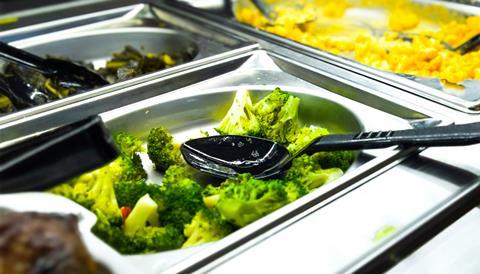
I’m really happy that the UK government has set new regulations for school dinners, starting in 2027. Called ‘the biggest shake-up to school dinners in England in over a decade,’ here’s what to expect for your kids’ new school menus:
- The complete ban on deep-fried foods
- Boosted fresh fruit and vegetables
- More fibre and wholegrains (pasta dishes must be 50% wholewheat once a week)
- Sweet desserts will be reduced to twice a week in secondary schools and once a week in primary schools, and must be served with a portion of fruit
- Processed meats will be available only once a week, and must be served with a side of vegetables or fruit
- Rules and monitoring of breakfast club menus
- Deep-fried chips will have to be oven-baked instead.
Education Secretary Lucy Powell said they were ”once-in-a-generation changes’ which would ‘transform school food for children across the country”. The Department for Education said it hoped the reforms would tackle childhood obesity, improve nutrition and support children’s concentration, learning and wellbeing.
Turkish delight
I live in Türkiye where the school menus are very healthy. (My Turkish mum friends are horrified when they hear that schools serve chicken nuggets and fries.) Breakfast is a variation on a traditional Turkish breakfast — eggs, olives, cheese, cucumbers and bread. (Jam and honey are also available, which, interestingly, have been removed from UK breakfast clubs under the new rules.) Lunch is always a soup, a chickpea or meat dish, rice, and a variation on salad or roasted vegetables.
If I lived in the UK, I would welcome these new government changes for my own sons as a mum. Furthermore, I wish they had happened when I was in secondary school in the nineties, when my friends and I would skip breakfast, then be hungry by break, and eat an iced bun or a chocolate rice krispie cake in the canteen (hello sugar spike). Lunch was always a white bread sandwich, a slice of pizza, deep-fried processed potato smiles or chips, and another sweet cake for dessert (just in time for a sugar-crash in time for fifth-period English). Would my academic achievement (and health!) have been different as a teenager if changes like this had been implemented at that time?
I struggled with my weight growing up, and the culturally preferred body shape of the decade was skinny, so I thought salad was my only option. I didn’t know that protein would keep me full and help me grow, or that a handful of walnuts would be a satisfying break-time, keeping keep my brain ticking over until lunch. Sadly, disordered eating was rampant among my friends back then. Today, the challenges look different, with body-image pressures coming from online, but I’m thankful to God for the leaps and strides we have made in body neutrality and nutrition education as a society.
Hitting the “sweet spot”
Marissa Buckley, from the charity Chefs in School, said: ”Children deserve to eat proper food and they’re not — I can’t understand why it’s not a fundamental part of education.” She’s nailed it. Teaching children how nutrition fuels our bodies for study, exercise and success is key to supporting them through these new menu changes. At home, let’s talk about how whole foods are God’s original plan for us to eat. Ask your kids how they feel in their bodies going to maths after a protein-rich breakfast vs. a sugary crepe at breakfast club. Show them the ingredient lists for fast food and processed foods, and how low their nutritional value is.
Let’s talk about how whole foods are God’s original plan for us to eat
Of course, black-and-white legalistic thinking around food is also unhealthy and can lead to food restriction and other eating issues. But I think the new government guidelines have hit the ”sweet spot” here. There is a place for desserts, and fast food will happen from time to time (my family loves an occasional Maccys). Desserts give us pleasure, comfort and a way to celebrate life! Fast food is convenient and tasty. But school isn’t the place for it. If, as mums and dads, we know our children are enjoying whole foods at school, then treat foods can be enjoyed occasionally with friends and family during breaks and holidays — and I think it’s important for children to understand this, too. It’s about balance.
Now, as with any big changes, there are concerns. One headteacher, Rob Fox, pointed out that some children haven’t been exposed to a variety of fruits and vegetables, and that educating them will be key, as children need to enjoy their meals: ”We do not want children to have a plate full of broccoli and throw it in the bin.” As a youth worker myself, I agree he has a valid point. It’s key that these menu changes are still tasty and filling enough for children to access them.
What part can we play?
In January 2026, over 2.2 million pupils in England alone were eligible for free school meals (26.5% of all pupils). Some strong posts on X claim that if families can’t support healthy eating at home, children will struggle to adapt to the changes. They are not wrong, and there are no easy answers. But as parents, youth workers, and Sunday school teachers, let’s think about how we can help prepare the children in our lives for these upcoming changes. Because if we really believe the gospel is about the redemption and renewal of all things, that includes health and nutrition. Church leaders, how could we integrate food education into the programmes and outreach that children and young people attend? This may start with offering a plate of apple slices next to the biscuits at Friday night youth group, but it can go much further. Here are some ideas:
- Start exposing new foods slowly at meals at home, and even at church youth groups. Even if you get pushback, keep making fresh fruit and vegetables available, and make easy swaps like handmade pasta sauce with pulverised veg instead of tinned sauce, which can be high in salt and sugar
- Get children involved in cooking at home. Choose one meal at the weekend to research and make together — and let them shop and lead the process
- If you have garden space, try planting a small vegetable garden with your kids. We only had a balcony, but we managed a tomato plant and some herbs, and my six-year-old loved the experience. Showing them how amazing it is that the soil gives us food gives both the kids and us a sense of appreciation and awe
- Talk about food and healthy eating at church. Do a Bible study on how our bodies are temples of the Holy Spirit
- If you have a nutritionist in your church, ask them to write a Bible lesson series on food with a biblically balanced approach. Ensure that enjoying food for feasting and celebrating is included
- Keep an eye out for any children who seem concerned about their weight and offer support. Reducing older teens’ access to social media may also be necessary.
Nutrition and redemption
I don’t know how these changes will go down for all families across the UK, particularly those on free school meals, but I do think they are a positive step forward. Any positive generational change takes time. As a child on free school meals myself, my Christian parents didn’t see nutrition as part of God’s redemption plan. It was a very different time. But here I am, forty years old, and I do things differently. Over time, I have learned to feed my family with health in mind. As believers, we have a responsibility to get behind these changes, so let’s take action and pray for this generation of children to learn to eat in a way that’s best for them and their future.




















No comments yet