










The UK’s Neet crisis has been declared a ”moral failure” by the Prime Minister. As the government prepares a major review of youth employment, Becky Hunter-Kelm argues that Christians are uniquely placed to step up — in their homes, their churches and their workplaces.
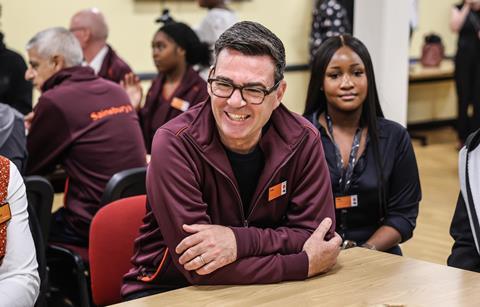
Nearly one million young people in the UK are not in education, employment or training -– a group otherwise known as “Neet”.
Writing in The Times, Prime Minister Andy Burnham said: ”This is an economic catastrophe and a moral failure. And it must change.”
Burnham believes it’s time the government ”invest in the success of our young people”, rather than ”pay for failure through the benefits system”. Of the one million Neets in the UK, around 39% are unemployed, while the remaining 61% are not seeking work, with around 331,000 18-24-year-olds on benefits.
”Today, the welfare system provides an assessment, a payment and, after that, goodbye,” Burnham wrote. ”Too often there is no support, no offer of skills and no opportunity to get a job.”
Let our faith shape how we respond to this Neet crisis.
One change he proposes is to align welfare entitlement with young people’s ambitions and what they truly need to achieve them. There are also plans to make 22,400 apprenticeship opportunities available across industries in 2027. This is good news because, as Andrea Zanin points out, God made all young people differently, so our children and young people need a variety of available pathways into work, not just the university route.
Government plans to shift its budget away from the welfare system and toward employment support could really help get our youth what they want: a job! And Milburn, who is leading a major review into Britain’s youth jobs crisis, calculated that the government spends 25 times more on benefits for young people than on getting them into work, which is a pretty shocking statistic.
”This is not a workshy, snowflake generation,” Milburn said.
As parents and carers of faith, let’s stand up and say: “We agree!” Let’s step back, look at the cause of this “moral failure”, and let our faith shape how we respond to this Neet crisis.
Less casual work available
The first challenge is the labour market – which looks very different from when I was at school! From age 14, I had a variety of weekend jobs in bookshops, pubs and coffee shops to earn my pocket money. My summer jobs while at uni also helped me travel on short-term mission trips. I grew up on benefits myself, so I got the maximum student loan, but I got a job straight after university in the third sector.
My husband didn’t know what he wanted to do, so he ended up going into teaching the long way round, working for the Local Education Authority (LEA), then as a teaching assistant, re-doing his science GCSE at 22. As newlyweds, we took in lodgers so he could pay his way through his PGCE.
Young people today can’t experience the satisfaction of earning their own cash as teenagers, because the opportunities aren’t there.
My point is, even though neither of us had huge career ambitions, we figured things out as we went along, mainly because casual work was more available back then than it is today.
Reflecting on my own experience, I think work breeds a passion to work. And young people today can’t experience the satisfaction of earning their own cash as teenagers, because the opportunities aren’t there. This is an opportunity for believers in business to be part of the solution:
- What if we got together in our churches to create Saturday jobs the youth could apply for?
- What if professionals in the body of Christ applied to have apprentices under the new government schemes next year?
The distraction of social media
Another set of goalposts has changed since I was young – I didn’t have Snapchat or TikTok on my phone to distract me 24/7. Burnham pointed out that social media consumption is also resulting in lower confidence among young people. If Neet young people spend hours scrolling at home, their self-esteem plummeting with every reel as they compare themselves to others on Instagram, it’s not surprising that job hunting, writing a CV, or going to an interview is even harder for them.
Invite children into our work lives
The Guardian has also pointed out that state institutions, such as schools, the NHS and the welfare system, have failed to prepare young people for work. Once again, we need to fill this gap as believers:
- Are we teaching our kids a good theology of work in the home? God made us to enjoy satisfying, meaningful work, so let’s open up the Bible with our children on the subject
- Let’s consider how we can invite our children into our work lives even from a young age
- Let’s encourage our children to pray and seek God about their future career paths, whatever it may look like.
Volunteer opportunities
The other night, I helped a student friend of ours here in Türkiye create his CV to try to get his first job after uni and completing his mandatory military service. I deleted the first sentence that said ”No work experience yet”, and instead we wrote a paragraph on his ”Work and life experience”, highlighting the skills and personality traits he will bring to his first role.
This reminded me how young people need opportunities to volunteer as they grow up to gain the experience they need to feel confident entering the workforce. The church is brilliant for this (everything my young graduate friend could add to his CV came from his ministry in our church). But as members of the Body of Christ, can we go one step further and provide voluntary experiences in our workplaces that are available to one another’s kids in church?
What’s next?
As a result of the “moral failure” declared by the PM, we can expect a full review of young people and work next month. This will affect those on benefits, and this could be worrying for some. We urgently need to pray for wisdom for those in government as they make plans for the future.
If God sees this crisis as Burnham does, as a ”moral failure” (aka, violating deeply held ethical principles or societal moral standards), then we can also stand in the gap and repent on behalf of our nation.
Don’t carry this burden alone – share your heart with your church and know God hasn’t forgotten your child.
Let us pray for our young people, that the landscape would change in the UK so they can enjoy the meaningful work God has for them.
And if you’re reading this as a parent of a Neet young person, it’s understandable to feel anxious about their future. You don’t have to put on a brave face or pretend everything is fine. Don’t carry this burden alone – share your heart with your church and know God hasn’t forgotten your child.
The following also might be helpful:
- The Prince’s Trust – they offer free personal development programmes, mentoring and short courses across the UK, specifically designed to build confidence in Neet young people
- Local youth services & Jobcentre Plus – many local councils have dedicated Neet teams or youth hubs with specialised work coaches who understand anxiety and low confidence
- Mental Health Support – if your child is struggling with anxiety or depression, consider reaching out to the Association of Christian Counsellors UK.