







In light of renewed speculation that a boat-shaped formation in Turkey resembles the dimensions of Noah’s Ark, Lisa Skinner considers how we can explore questions about the weird and wonderful stories of the Bible with our children while pointing them to Jesus.
My son’s bedtime routine often involves a fictional story followed by a Bible story. But sometimes I worry that, in his young mind, the two might blur into one.
After all, a book filled with giants, witches, talking donkeys, angels, demons, an apocalyptic flood and people being raised from the dead can sound more like the stuff of fairy tales than the world we know. Yet, as Christians, we believe that behind these extraordinary accounts lies something far greater than imagination.
How do we help our children, captivated by the wonder of fairy tales, recognise the truth of scripture? How do we teach them that the gospel isn’t simply another wonderful story, but the greatest true story ever told?
We believe that behind these extraordinary accounts lies something far greater than imagination.
Perhaps the answer isn’t to discourage their questions or ask them to believe blindly, but to explore those questions together. After all, if we’re raising children to believe that the Bible is true, shouldn’t we also help them understand why?
A faith that welcomes questions
I wasn’t a particularly inquisitive child. My parents told me Bible stories, and I listened to them in Sunday school, but I rarely questioned anything. I’m not even sure it occurred to me that I could. I simply listened and accepted.
My husband was the opposite. To this day, he questions almost everything – not necessarily to be difficult, but because he wants to understand things for himself.
Our son seems to have taken after his dad. So how do I answer his questions, particularly when I’m not always sure of the answers myself? More importantly, how do I encourage him to ask even more?
In teaching my son that it’s okay to ask questions, I’m discovering that it’s okay for me to ask them, too.
Wonder invites curiosity, and not just in him, but in me, too. Recently, while watching Project Hail Mary together, I turned to him and asked, “Do you think there’s life beyond our world?”
He replied, “Mum, our universe is massive. Why would God make it so big if we’re the only ones in it?”
The question stopped me in my tracks.
Maybe the most important thing wasn’t having an answer ready for him, but being willing to explore the question together. And in teaching my son that it’s okay to ask questions, I’m discovering that it’s okay for me to ask them, too.
Searching for Noah’s Ark
We’re often taught that establishing the truth of something requires evidence, and that matters just as much to children as it does to adults.
Which brings us to Noah’s Ark. While many have challenged the idea of a global flood, could researchers in Turkey be on the verge of uncovering something remarkable?
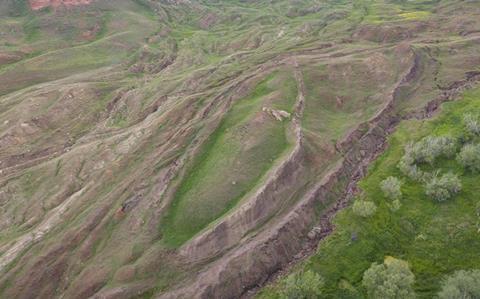
In eastern Turkey, a mysterious boat-shaped formation, known as the Durupınar site, has attracted renewed interest. Located near Mount Ararat, the formation has been suggested by some to resemble the dimensions of Noah’s Ark. Researchers have been investigating unusual features beneath the surface, although whether these have any connection to the biblical account remains disputed.
It’s a fascinating possibility, and one that has captured our imaginations. However, the more important lesson for our children is learning to distinguish between evidence, interpretation and speculation.
The more important lesson for our children is learning to distinguish between evidence, interpretation and speculation.
My goal isn’t to prove that Noah’s Ark has been discovered, or to point to evidence of other biblical stories. Rather, it’s to encourage us to raise children who understand that biblical faith is grounded in truth, while giving them the confidence to ask difficult questions.
Christian faith doesn’t require us to have archaeological proof of every biblical event. But neither should we be afraid to examine the evidence we do have, or acknowledge where questions remain unanswered.
The evidence that matters most
A friend of mine is a history teacher, and she’ll tell you that sources are key.
The gospels themselves are historical sources, written from different perspectives, but sharing a remarkable degree of agreement about the central events of Jesus’ life, ministry, death and resurrection.
Beyond the Bible, historians such as Josephus provide independent references to Jesus and the early Christian movement.
We can also visit places associated with the biblical accounts, including the Mount of Olives and the Pool of Bethesda in Jerusalem.
These places, writings and discoveries allow us to show our children that Christianity emerged within real human history, not merely in the imagination of a storyteller.
And yet, historical evidence can only take us so far.
We can point our children towards evidence for Jesus’ existence, the world in which He lived and the people associated with Him. We can explain why the gospels deserve to be taken seriously as historical sources. But the very heart of Christianity rests on a claim more extraordinary than any other – that Jesus Christ rose from the dead.
We can introduce our children to historical evidence, answer their questions and encourage them to think critically, but we cannot manufacture faith on their behalf.
As the apostle Paul writes in 1 Corinthians 15:14, “If Christ has not been raised, our preaching is useless and so is our faith.”
I love an illustration that John Lennox has used about the difference between scientific observation and personal knowledge. We can observe the physical details of a handshake or a smile, but understanding the love behind those gestures involves something more than measuring what we can see.
That’s a helpful reminder for us as parents. We can introduce our children to historical evidence, answer their questions and encourage them to think critically, but we cannot manufacture faith on their behalf.
Ultimately, we want them not simply to know about Jesus, but to know Him for themselves.
The best bedtime story
Tonight, I’ll probably find myself reading another fairy tale before turning to the pages of scripture.
There will be giants, miracles and events that stretch my son’s imagination. And he’ll likely have more questions than I have answers. But that’s okay. Because my responsibility isn’t to remove every mystery from the Bible or to provide an answer to every question. It’s to help him discover that behind these extraordinary stories stands an extraordinary Saviour – one who didn’t simply exist in the imagination of a storyteller, but who stepped into human history.