










From homework help to life advice, AI is everywhere. Matt Wan from Cross Connecting thinks that Christian families can navigate this digital shift with wisdom, asking how new tools shape both learning and faith
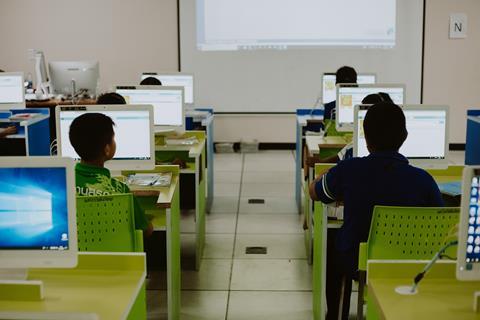
Wherever you look, AI is now used extensively by young people, whether it’s homework help, getting life advice, creating social media content or perhaps just replacing traditional search engines. What differentiates a young person’s lived experience today compared to those even just five years ago is familiarity – or maybe even dependency – on AI.
It’s therefore of no surprise that there is a growing body of research that seeks to understand the use of AI at school. The Department for Education has recently released a white paper that proposes investment worth tens of millions into so-called “educational technology” where AI is very much at the centre.
a whopping 93% of those surveyed have used AI for homework or revision
Research suggests that 87% of young people surveyed (predominantly secondary-aged) use ChatGPT, 70% of young people surveyed use AI at least weekly, and a whopping 93% of those surveyed have used AI for homework or revision. The young people themselves overwhelmingly believe that this is a good thing: 60% of young people believe AI is helpful (compared to only 7% who believe it’s harmful), and the majority report finding AI more helpful than textbooks or even their own classroom teachers when learning various topics at school.
Those who encourage the use of AI in education point to the potential that AI has. It can:
- explain difficult scientific concepts at the pace of the individual;
- help a dyslexic pupil structure their writing;
- generate mock exam questions to aid revision;
- explore existing literature and thinking when it comes to faith questions in RE.
For the majority of us, it’s easy to be confused and not know what to think
Those who oppose the adoption of AI in education point to:
- The reduction in critical thinking (or any thinking at all!);
- the moral grey area between what is the pupil’s own work and what isn’t;
- taking unhelpful life advice (or even developing unhelpful “relationships” with AI);
- an unhelpful dependence on AI.
There has been a mixed response from the Christian community when it comes to what to make of AI, ranging from broad acceptance to broad rejection, and of course everything in between. For the majority of us, it’s easy to be confused and not know what to think, in an environment where even the loudest voices cannot keep up with the pace at which AI is advancing.
Despite being written nearly 2000 years ago, the Bible is perhaps not the most obvious place to go to when looking to speak into the AI discourse, but yet within its pages, we do find remarkable wisdom that we should perhaps not so quickly dismiss. In Paul’s first letter to the Corinthians, he writes:
“You are free to eat anything sold in the meat market, without asking any questions because of your conscience. For, as the scripture says, ‘The earth and everything in it belong to the Lord.’ If an unbeliever invites you to a meal and you decide to go, eat what is set before you, without asking any questions because of your conscience. But if someone tells you, ‘This food was offered to idols,’ then do not eat that food, for the sake of the one who told you and for conscience’ sake — that is, not your own conscience, but the other person’s conscience.” (1 Corinthians 10:25-29).
Read more:
How Christian parents can help their kids use AI to be co-creators rather than consumers
Christian parents shouldn’t buy AI toys for their kids
Paul makes the case here that all meat is good to eat, but for the sake of causing someone else to stumble, we as Christians should pull back, not for our sakes, but for the sake of others and serving them well, as to not make others stumble. In other words, the underlying principle in this passage is all about making decisions which serve other people and their needs, and that is how we honour Him. It’s therefore of no surprise that Paul continues by writing “whatever you do… do it all for God’s glory” (1 Corinthians 10:31).
Deciding whether to eat certain meats in the 1st century may seem far removed from deciding how (or whether) our children should use AI in the 21st century. Yet the underlying principles remain the same. The questions we therefore need to ask ourselves are:
- Where can my child’s use of AI, whether at home or at school, be genuinely helpful with their education (and overall development), and therefore be to God’s glory?
- How can AI help/hinder my child’s faith?
- What might the stumbling blocks be for my children’s faith (and overall development) when using AI (e.g. for schoolwork), and how can I help them to navigate these well? Where is the line between effective use of the tools available to us, and being lazy/cheating?
- Are there ways that my family’s decision on how to engage with AI would become a stumbling block to others, including to other Christians?
It is unlikely that parents from any two families will have the same view on all these questions. Such is the nature of conscience decisions! The purpose of asking these questions is not to find the ‘right answer.’ Rather, considering these questions carefully, we will be better equipped to help our children navigate a world already saturated with AI (and let’s face it, if you are a parent, chances are that your child has already used AI to some degree, whether you know about it or not).
When it comes to using AI, we have the opportunity to be a positive influence not only on our children, but also with the schools they are in. Let’s make use of it
The truth is that none of us, neither parents, teachers, tech companies, governments, or even churches, fully understand how AI will shape the next generation. That uncertainty can feel unsettling. Yet Christians have always been called to exercise wisdom in such scenarios. We do not need perfect foresight to be faithful Christian parents.
The ultimate question is therefore not whether your child will encounter AI. They certainly will (or probably already have). The question is whether they will learn to use it wisely, responsibly, and for God’s glory.
Wherever we all individually land, the challenge is then how to communicate our thoughts well, both with our own children, and with their classroom teachers for whom AI is becoming more commonplace.
Whatever you make of this, we can agree that it’s far from doom and gloom for the Christian parent. Technology may change rapidly, but God’s wisdom does not. AI may be new, but Christian parents have always been called to help their children grow in wisdom, discern truth, and follow Christ in changing times. When it comes to using AI, we have the opportunity to be a positive influence not only on our children, but also with the schools they are in. Let’s make use of it.




















No comments yet